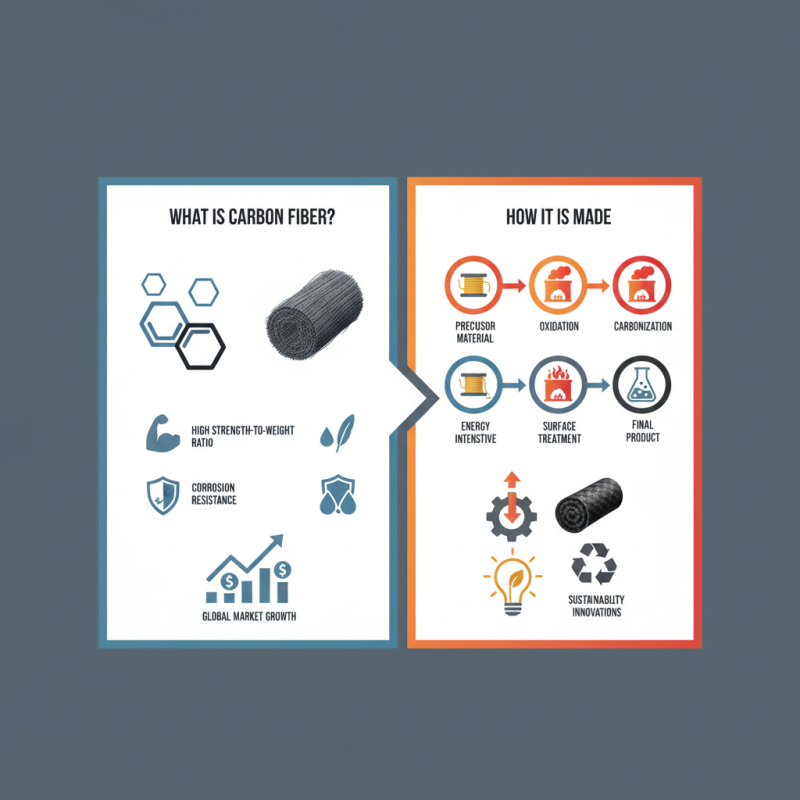
Carbon fiber is a remarkable material widely used in various industries, including aerospace and automotive. According to a recent report from MarketsandMarkets, the global carbon fiber market is projected to reach $5.5 billion by 2025. This growth stems from its unique properties, such as high strength-to-weight ratio and corrosion resistance. Understanding "what is carbon fiber and how is it made" is crucial for professionals and enthusiasts alike.
The production process of carbon fiber involves converting precursor materials into thin strands of carbon. This transformation includes steps like oxidation, carbonization, and surface treatment. Interestingly, the manufacturing can be energy-intensive and requires careful monitoring. Current techniques may not always optimize resource use, raising sustainability concerns. Despite its advantages, carbon fiber also presents challenges, particularly in recycling efforts.
In summary, while carbon fiber revolutionizes multiple fields with its benefits, the industry must address its limitations. As technology progresses, innovations could enhance production efficiency. Understanding both the advantages and shortcomings of carbon fiber will shape its future. The exploration of "what is carbon fiber and how is it made" remains a significant topic of discussion.
What is Carbon Fiber and Its Unique Properties
Carbon fiber is a remarkable material, known for its unique properties. It is made from thin strands of carbon, often bonded with a resin. This combination results in a lightweight yet incredibly strong material. The tensile strength of carbon fiber is approximately five times greater than that of steel, yet it is much lighter. According to industry reports, the carbon fiber market is expected to reach $6 billion by 2025, driven by its increasing use in aerospace and automotive industries.
One of the standout features of carbon fiber is its excellent fatigue resistance. This means it can withstand repeated stress without failing. Additionally, it has a high thermal stability, making it suitable for high-temperature applications. However, producing carbon fiber is energy-intensive and costly. A common point of concern is the environmental impact linked to its manufacturing process. Though it holds great potential, the sustainability of carbon fiber production must be examined closely.
It’s important to reflect on potential improvements in the carbon fiber industry. The recycling and reuse of carbon fiber remains a challenge. Currently, the recycling rate is low, with only a fraction being reused. Innovations are needed to enhance sustainability efforts. As more industries adopt carbon fiber, addressing these issues will be crucial for future growth.
The Raw Materials Used in Carbon Fiber Production
Carbon fiber is a remarkable material known for its strength and lightweight properties. Its production begins with specific raw materials that are crucial to the process. The primary ingredients in carbon fiber manufacturing include polyacrylonitrile (PAN), pitch, and rayon. Among these, PAN is the most commonly used precursor. It offers excellent mechanical properties once it is spun into fibers.
The transformation of these raw materials into carbon fiber is quite intricate. First, the chosen precursor is polymerized and then spun into fibers. The fibers undergo several stages, including stabilization, carbonization, and surface treatment. These steps are essential for achieving the desired strength and rigidity. However, it’s important to note that sourcing these materials can be challenging. The environmental impact of extracting raw materials often raises questions.
Many industries are exploring sustainable alternatives to traditional precursors. Innovations in using bio-based materials are growing but still face technical hurdles. While these developments show promise, the journey toward a fully sustainable carbon fiber remains complex. Each step of the production process offers potential for improvement and reflection. Attention to detail is key in achieving high-quality carbon fiber products. Thus, understanding the raw materials' impact is crucial for future advancements.
Step-by-Step Process of Making Carbon Fiber
Carbon fiber is a lightweight and strong material, popular in various industries. The process of making carbon fiber involves several detailed steps that transform raw materials into this advanced composite. Typically, the journey begins with polyacrylonitrile (PAN) fibers. These fibers undergo stabilization by heating them in air, which leads to the initial chemical changes.
After stabilization, the fibers are carbonized in an inert atmosphere. This heating process takes place at high temperatures, often exceeding 1000 degrees Celsius. It’s important during carbonization to control the environment tightly. Any impurities can affect the fiber's strength. Once carbonized, the fibers are extremely thin and mainly composed of carbon atoms.
Finishing touches include surface treatment and sizing, which enhance adhesion during composite manufacturing. These steps may seem minor, but they significantly affect the end product's performance. Even small mistakes or oversights in processing can lead to weaker materials. It's essential to reflect on each stage carefully, ensuring optimal results. This level of attention can make a difference between ordinary and extraordinary carbon fiber products.
Applications and Benefits of Carbon Fiber in Industries
Carbon fiber is transforming various industries due to its unique properties. Lightweight yet incredibly strong, it is widely used in aerospace, automotive, and sporting goods. According to a report by the Market Research Future, the global carbon fiber market is expected to reach $6 billion by 2025. This growth reflects its increasing demand in sectors where weight reduction is critical.
In aerospace, carbon fiber plays a vital role in manufacturing aircraft components. For example, the Boeing 787 Dreamliner employs about 50% composite materials, which include carbon fiber. This reduces fuel consumption significantly. In the automotive industry, Tesla uses carbon fiber in its vehicles to enhance performance while maintaining safety. This results in improved efficiency and faster speeds.
However, the production of carbon fiber is not without challenges. Its manufacturing process is energy-intensive and can be costly. Additionally, recycling carbon fiber remains a growing concern. While some innovations are emerging, widespread recycling methods still need development. The environmental impact of raw material extraction adds pressure for more sustainable solutions.
Applications and Benefits of Carbon Fiber in Industries
Maintenance and Longevity of Carbon Fiber Products
Carbon fiber products are known for their strength and lightweight properties. However, to maintain their longevity, proper care is essential. Regular cleaning can prevent dirt buildup and enhance the material's appearance. Use a soft cloth or sponge with mild soap to wipe down surfaces. This helps to preserve the glossy finish that many users appreciate.
One common mistake is exposing carbon fiber to extreme temperatures. High heat can weaken the resin that holds the fibers together. Similarly, exposure to harsh chemicals can damage the surface. Always check the environment where the items are stored. Ideally, they should be kept in a climate-controlled space.
Paying attention to scratches and dents is also crucial. These imperfections can become entry points for moisture and dirt, leading to more significant issues over time. Inspect your products regularly and address any damage promptly. It’s easy to overlook small signs of wear, but addressing them early can save you time and cost in the long run. Taking these steps helps extend the life of your carbon fiber products while keeping them in great condition.
What is Carbon Fiber and How is it Made Explained in Tips - Maintenance and Longevity of Carbon Fiber Products
| Property |
Description |
Maintenance Tips |
Longevity Factors |
| Weight |
Carbon fiber is known for its lightweight properties, being significantly lighter than metals. |
Keep products free from heavy impacts to maintain structural integrity. |
Proper storage in dry conditions can help prolong lifespan. |
| Strength |
Carbon fiber exhibits outstanding tensile strength and stiffness. |
Avoid exposing to extreme temperatures which can compromise strength. |
Regular inspections can help detect any signs of wear early. |
| Corrosion Resistance |
Resistant to corrosion, making it suitable for various environments. |
Clean with mild soap and water; avoid aggressive chemicals. |
Protect from UV rays to prevent surface degradation. |
| Manufacturing Process |
Made from carbon atoms bonded together in a crystal structure. |
Ensure products are sourced from reputable manufacturers. |
Understanding the production quality can relate to performance longevity. |
| Applications |
Used in aerospace, automotive, and sports equipment for its properties. |
Follow guidelines specific to application for maintenance. |
Application-specific usage can affect usability lifespan. |
FAQS
: The main raw materials are polyacrylonitrile (PAN), pitch, and rayon. PAN is the most commonly used.
Carbon fiber production involves polymerization, spinning into fibers, stabilization, carbonization, and surface treatment.
Carbonization occurs in an inert atmosphere at high temperatures. It transforms fibers into carbon-rich structures, affecting strength.
Sourcing raw materials can be difficult. The manufacturing process is energy-intensive and expensive.
Yes, industries are exploring bio-based materials, but they face technical hurdles in implementation and performance.
Carbon fiber reduces weight in aircraft components, enhancing fuel efficiency and overall performance, as seen in modern planes.
Recycling methods for carbon fiber are not widespread. Many innovations in recycling are still under development and face challenges.
Small errors during the manufacturing process can lead to weaker materials and impact the product's overall quality and performance.
Conclusion
Carbon fiber is a lightweight, high-strength material known for its unique properties, including excellent tensile strength, low weight, and resistance to chemical degradation. Understanding what carbon fiber is and how it is made involves delving into its production process, which utilizes precursor materials like polyacrylonitrile (PAN) and pitch. The step-by-step process of making carbon fiber includes spinning the raw materials into fibers, followed by stabilization, carbonization, and surface treatment to enhance adhesion.
Beyond its production, carbon fiber offers numerous applications across various industries, including aerospace, automotive, and sports equipment, thanks to its durability and performance advantages. Maintenance of carbon fiber products is crucial for ensuring longevity, as proper care can significantly extend their life. Overall, carbon fiber represents a significant advancement in material science, enabling innovative solutions across multiple fields.

 RAXIS Fiber