How to Choose the Right Carbon Fiber Material for Your Needs?

Time:2026-05-01 Author:Isabella
0%

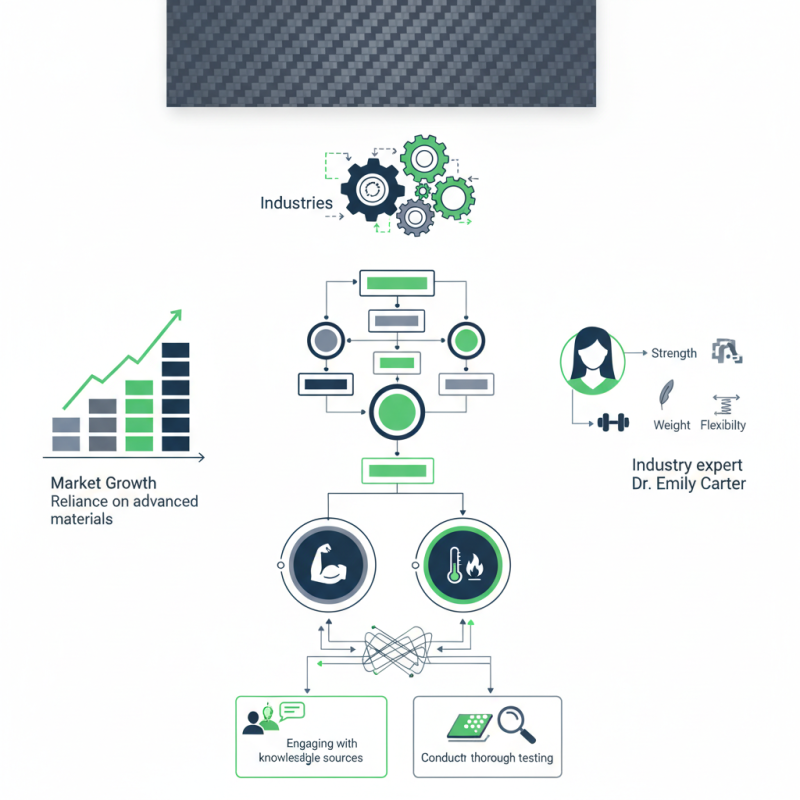
Choosing the right carbon fiber material is crucial for many industries, including aerospace, automotive, and sports equipment. A recent market analysis from Reports and Data indicates that the global carbon fiber market is projected to reach $6.85 billion by 2027, growing at a CAGR of 10.3%. This shows the increasing reliance on advanced materials in engineering.

To navigate this landscape, it is essential to understand the specific characteristics of carbon fiber grades. Industry expert Dr. Emily Carter has emphasized, "Selecting the right carbon fiber material can significantly impact performance and durability." Her insights highlight the importance of matching material properties with project requirements, such as weight, strength, and flexibility.

When considering how to choose the right carbon fiber material, one must evaluate factors like tensile strength and thermal resistance. The variety in formulations can be overwhelming, and relying solely on generic data may lead to misapplication. Thus, engaging with knowledgeable sources and conducting thorough testing is vital for making informed decisions in this complex field.
How to Choose the Right Carbon Fiber Material for Your Needs?

Understanding Different Types of Carbon Fiber Materials Available

When selecting carbon fiber materials, understanding the various types is crucial. Carbon fiber is categorized primarily into two types: standard modulus and intermediate modulus. Standard modulus fibers offer high tensile strength, making them ideal for applications like automotive parts and sporting goods. Reports suggest that the global demand for these materials will grow by over 9% annually in the next five years.

Intermediate modulus carbon fibers provide a balance between strength and stiffness. They are often used in aerospace and military applications, where performance is critical. Recent studies indicate that these fibers exhibit improved rigidity compared to standard options, which may enhance structural stability in certain environments. Selecting the wrong type, however, can lead to failures or performance issues in high-stress situations.

Manufacturers sometimes blend fibers to achieve specific properties. This can complicate choices. Evaluating your application's unique demands is essential. Pay attention to factors such as weight limits and environmental exposure. Many users overlook these details. Choosing the right carbon fiber material is not straightforward. Misjudgments could result in material inefficiencies. It's important to gather all relevant data and possibly consult with experts in the field to ensure optimal selection.

Evaluating Strength and Weight Requirements for Your Project

When choosing the right carbon fiber material, understanding your strength and weight requirements is crucial. Carbon fiber is renowned for its impressive strength-to-weight ratio, making it suitable for various applications. For projects needing high tensile strength, consider material types with higher fiber content. These variants can provide the needed durability while being lightweight.

Weight is another pivotal factor. In aerospace or automotive designs, every gram counts. Selecting a lighter carbon fiber can enhance overall performance. However, lighter materials might compromise strength under certain conditions. It’s essential to reflect on the balance between the desired weight and the necessary strength. Experimenting with different combinations can lead to unexpected insights. So, don’t hesitate to iterate on your choices.

Testing prototypes using various carbon fibers helps reveal their true performance. Monitor how they respond to stress and load. It’s not about finding a perfect material, but rather a suitable one that fits your unique needs. Each project may require adjustments, and learning from these variations can lead to better outcomes in the future.

Strength vs Weight of Different Carbon Fiber Materials

Assessing Cost vs. Performance in Carbon Fiber Options

When assessing carbon fiber materials, cost and performance must be weighed carefully. According to a recent report by the Composites Market Research, prices for carbon fiber can range from $10 to $30 per pound. This variance depends on the type of fiber and its intended application. Aerospace industries, for example, often opt for high-performance grades that are pricier but offer superior strength-to-weight ratios.

Performance metrics like tensile strength and fatigue resistance are crucial in determining the right material. For instance, high-modulus carbon fibers boast tensile strengths exceeding 600 ksi, but at a higher cost. On the other hand, standard modulus fibers provide similar performance at a reduced price point. These differences can influence project budgets significantly and may require compromises.

Understanding your specific needs is essential. Some applications such as automotive parts can tolerate lower grades at a lower cost. However, for critical aerospace components, investing in premium materials is non-negotiable. Balancing cost and performance is an ongoing challenge, and selecting the proper material often involves reflecting on both immediate needs and long-term implications.

Exploring Manufacturing Processes and Their Impact on Quality

Choosing the right carbon fiber material involves understanding its manufacturing processes. These processes significantly influence the quality and performance of the final product. For instance, the methods of weaving, curing, and resin application can vary widely. A simpler weaving pattern might be cheaper, but it may not provide the necessary strength.

Different curing methods also affect durability. Autoclave curing ensures even temperature distribution, leading to better outcomes. However, this method's complexity may raise production costs. On the other hand, using vacuum bagging can be more accessible but might result in inconsistencies. It’s essential to weigh these factors against your specific requirements.

The type of resin used is often overlooked. Epoxy resins are known for their excellent adhesion and strength. However, they might not perform well in extreme temperatures. When selecting a carbon fiber material, consider how these manufacturing choices meet your performance needs. Be reflective in this decision-making process. The right material can lead to significant improvements, while the wrong choices can lead to failures in applications.

How to Choose the Right Carbon Fiber Material for Your Needs?

Material Type Manufacturing Process Key Properties Ideal Applications Cost per Unit
T700 Carbon Fiber Prepreg Layup High tensile strength, low weight Aerospace, automotive $30 per kg
T800 Carbon Fiber Filament Winding Higher modulus than T700, lightweight Sports equipment, robotics $45 per kg
IM7 Carbon Fiber Resin Transfer Molding Excellent fatigue resistance, lightweight Wind turbine blades, military applications $50 per kg
S2 Glass Fiber Layup Process Good tensile strength and chemical resistivity Marine applications, construction $15 per kg

Choosing the Right Supplier for Your Carbon Fiber Needs

When selecting a supplier for carbon fiber materials, consider several critical factors to ensure you get the best fit for your project. Experience in the industry matters. A supplier with a long-standing presence can offer expertise that newer companies might lack. They often have proven methodologies and reliable sourcing channels, ensuring consistency in quality.

Tips: Look for suppliers that invest in R&D. Their commitment to innovation can lead to advanced materials tailored to specific applications. Check their certifications and quality assurance processes to understand their reliability.

Additionally, evaluate the range of materials they offer. A reputable supplier should provide a variety of options, from different weaves to various resin systems. This flexibility allows you to choose the right material for unique requirements, enhancing your project outcomes.

Tips: Don't hesitate to ask for samples. Testing materials firsthand helps gauge their suitability. A responsive supplier will be willing to assist you in this regard. Lastly, consider customer reviews and testimonials as they can reveal insights about product performance and service quality.

FAQS

: What should I consider when choosing carbon fiber materials?

: Evaluate strength and weight requirements. Carbon fiber's strength-to-weight ratio is vital for various projects.

How does weight impact performance in projects?

In aerospace or automotive designs, every gram matters. Lighter materials improve performance but may reduce strength.

Is there a perfect carbon fiber material for all projects?

No, each project needs adjustments. Focus on finding a suitable material that meets your unique needs.

What is the cost range for carbon fiber materials?

Prices can range from $10 to $30 per pound. The cost depends on the type of fiber and its application.

How do I balance cost and performance in my selection?

Assess your specific needs. Some projects can use lower grades while others demand premium materials. Reflect often.

What factors are important when selecting a carbon fiber supplier?

Look for supplier experience and commitment to R&D. Quality assurance processes and material variety matter too.

Should I request samples from suppliers?

Yes, testing materials firsthand is crucial. A responsive supplier will gladly provide samples for evaluation.

How can customer reviews help in supplier selection?

They offer insights into product performance and service quality, aiding in making an informed choice.

Is high-modulus carbon fiber always the best option?

Not necessarily. While it offers high tensile strength, assess budget constraints and application needs before deciding.

What role does experimentation play in material selection?

Experimenting with different combinations can reveal performance differentiators. Learning from trials enhances future outcomes.

Conclusion

When considering how to choose the right carbon fiber material, it's essential to understand the different types of carbon fiber materials available. Each type comes with its unique properties that can significantly affect the performance of your project. Evaluating the strength and weight requirements is crucial, as these factors influence the material's suitability for your specific application.

Additionally, it is important to assess the cost versus performance of various carbon fiber options. Balancing these elements will help you determine which material offers the best value for your needs. Exploring the manufacturing processes is another key area, as they can impact the quality of the final product. Lastly, choosing the right supplier is vital to ensure you receive high-quality carbon fiber tailored to your project specifications.

Isabella

Isabella

Isabella is a dedicated marketing professional with a sharp focus on driving brand growth and engagement through strategic content creation. With an extensive background in digital marketing, she combines her passion for storytelling with her keen understanding of industry trends to deliver......