What Are the Limitations of Carbon Fiber Materials?

Time:2026-09-23 Author:Sienna
0%

When engineers evaluate advanced composites, strength often dominates the conversation. Carbon fiber can make a bicycle frame, aircraft panel, or pressure vessel remarkably light. Yet performance depends on resin, fiber direction, loading, temperature, and manufacturing quality. This raises a practical question: what are the limitations of carbon fiber materials? The answer is not a single weakness. It is a chain of trade-offs.

In daily use, carbon fiber resists tension well but may fail suddenly under impact or crushing. A dropped tool can leave hidden damage beneath a smooth surface. Unlike steel, it does not always bend and visibly warn an operator. Its stiffness also creates an anisotropic structure, so strength varies with direction. Designers must align layers carefully and validate joints, holes, and bonded areas. Inspection may require ultrasound, thermography, or other specialized methods. These steps increase labor, equipment, and maintenance costs. Carbon fiber also conducts electricity, but its behavior differs from metals. This can complicate lightning protection and galvanic-contact control. Heat and fire performance depend heavily on the polymer matrix, not the fibers alone.

Cost and sustainability add further concerns. Producing high-quality carbon fiber requires significant energy, controlled processing, and skilled labor. Repairing damaged laminates is possible, but the result depends on access, surface preparation, curing, and inspection. Recycling remains more complicated than recycling common metals, especially when fibers and resins are tightly bonded. The picture is not simple. Some claims about carbon fiber sound too absolute. Real performance must be judged through testing, service conditions, recognized engineering standards, and lifecycle evidence. Careful design matters more than material reputation.
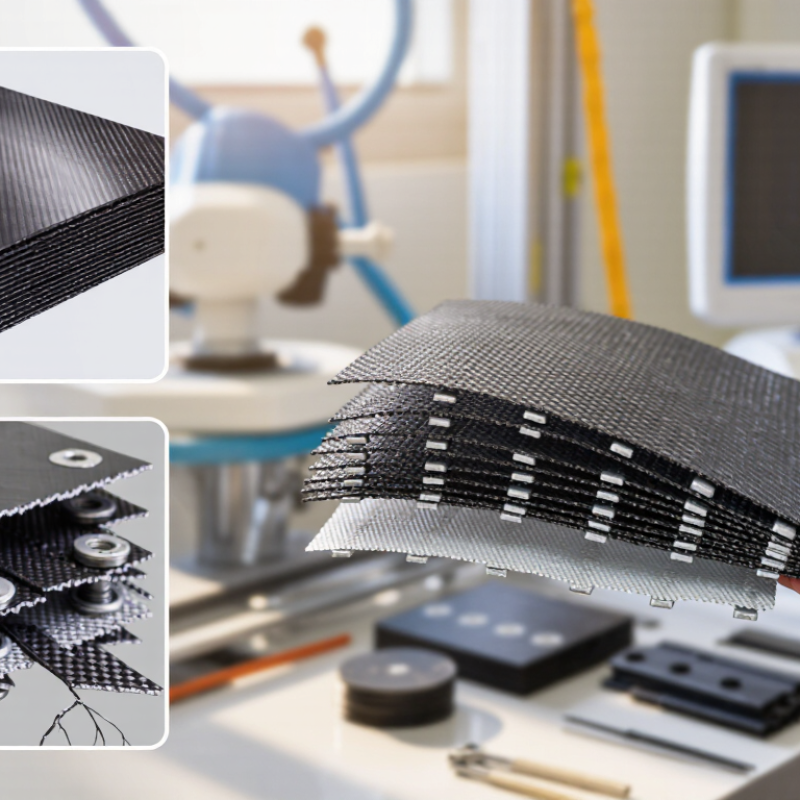
What Are the Limitations of Carbon Fiber Materials?

What Carbon Fiber Is and Where Its Limitations Begin

Carbon fiber is made from extremely thin carbon strands, usually woven or aligned before resin binds them into a rigid composite. The fibers carry most of the load, while the resin holds their position and transfers stress. This structure creates high stiffness with low weight. A properly designed panel can feel remarkably strong.

The limitations begin when the loading changes direction. Carbon fiber performs best along its intended fiber path. It is weaker across the weave and less forgiving under sudden impact. A small strike may leave only a shallow mark, while internal layers suffer hidden cracking. That damage is difficult to judge without careful inspection or specialized testing. Appearance can mislead.

Heat exposes another boundary. The carbon fibers tolerate high temperatures, but the surrounding resin may soften, discolor, or lose strength. Moisture, ultraviolet exposure, and repeated vibration can also reduce long-term performance.

Carbon fiber conducts electricity, which may create corrosion problems when it touches certain metals without proper isolation. Repairs require accurate material selection and controlled curing. They are not always simple.

Manufacturing also demands precision. Misaligned fibers, trapped air, or uneven resin can weaken an otherwise expensive component. Recycling remains difficult because separating fibers from cured resin often reduces quality. Carbon fiber is not automatically the best choice. In real engineering work, load direction, impact risk, temperature, repair access, and service life must be considered together. That judgment is sometimes harder than choosing the material.

Mechanical Limitations Under Impact, Stress, and Fatigue

What Are the Limitations of Carbon Fiber Materials?

Mechanical Limitations Under Impact, Stress, and Fatigue

Carbon fiber is exceptionally stiff, but stiffness does not equal toughness under impact. A dropped tool can create hidden damage beneath a surface that looks nearly untouched. The fibers may fracture, while the surrounding resin forms barely visible cracks. This is a practical inspection problem. Tap testing, ultrasonic scans, and controlled visual checks can reveal more than appearance alone.

Under repeated stress, carbon fiber behaves differently from metals. It does not usually yield gradually before failure. Instead, local fiber breaks, matrix cracks, and layer separation can grow with each load cycle. A bicycle frame, aircraft panel, or pressure vessel may remain functional while its safety margin quietly narrows. That warning is easy to miss. Designers must control fiber direction, laminate thickness, joints, and drilling details. Small holes can concentrate stress. Poorly supported edges can split.

Fatigue performance depends heavily on moisture, temperature, vibration, and manufacturing quality. A resin-rich pocket or slight void may become a starting point for damage. Laboratory fatigue data helps, but real structures rarely experience one clean load pattern. They face bumps, twisting, heat, and occasional overloads. Careful inspection improves reliability, yet it cannot remove every uncertainty. Carbon fiber is not fragile in every situation; it is unforgiving when damage is overlooked. More field data remains necessary for complex repairs and long service lives.

Environmental Limits: Heat, Moisture, Chemicals, and UV Exposure

Carbon fiber is strong, but its surrounding resin often sets the environmental limit. Heat is unforgiving. Elevated temperatures can soften the resin, reduce stiffness, and weaken the bond between layers. Short heat exposure may cause little visible damage, while repeated heating and cooling can create tiny cracks. These changes may remain hidden beneath a smooth surface. Engineers should verify the actual service temperature, not rely only on room-temperature strength data.

Moisture moves quietly. Water can enter through edges, fastener holes, scratches, or poorly sealed joints. The fibers usually remain stable, but the resin may swell and lose strength. Freeze-thaw cycles can worsen this damage by expanding trapped water. In field inspections, discolored edges and soft spots deserve attention. I have seen designs treat sealing as an afterthought. That assumption is difficult to defend in wet environments.

Chemical exposure depends on concentration, temperature, contact time, and resin chemistry. Cleaning fluids, fuels, solvents, and industrial vapors may cause swelling, surface tackiness, or gradual embrittlement. Compatibility testing with real chemicals is more reliable than a generic resistance chart. Ultraviolet light also attacks exposed resin, causing chalking, fading, and surface cracking. A protective coating can slow this process, but it may wear away at corners and joints. Small test panels, regular inspections, and conservative safety factors are practical safeguards. Yet test conditions rarely reproduce every outdoor variation. That uncertainty should remain visible in the design record.

Manufacturing Complexity and Design Constraints

Carbon fiber is often praised for its strength and low weight. Yet its manufacturing process is far more demanding than its smooth surface suggests. Unlike metals, it cannot simply be melted and reshaped. Each layer must be cut, positioned, and compacted with careful control. A small misalignment can create weak spots or unwanted thickness. That precision demands skilled labor and reliable inspection. Automation helps, but it does not remove every human decision. Operators still check corners, overlaps, and trapped air. This is where schedules can slip.

Design constraints appear before production begins. Carbon fiber performs best with continuous, well-aligned load paths. Complex curves, sharp corners, and sudden thickness changes can disrupt those paths. Tooling must hold the shape during curing, sometimes under heat and pressure. Molds can be expensive and difficult to modify. Changing one mounting hole may require a new tool, not a simple machining update. A metal bracket may tolerate late revisions. Carbon fiber parts usually offer less freedom.

Material selection adds another layer of difficulty. Resin systems, fiber directions, and joining methods affect performance. Engineers must also consider impact damage, moisture, heat, and inspection access. Testing is essential. Inadequate inspection can hide voids beneath a flawless surface. I have seen how attractive weight savings can overshadow repair costs. That judgment deserves more scrutiny. A lighter panel is not automatically a better design when production remains fragile.

Cost, Repair, Recycling, and Sustainability Challenges

Carbon fiber offers high strength with low weight, but its price remains a serious limitation. Manufacturing requires precise fibers, resin systems, controlled temperatures, and skilled labor. These steps consume energy and raise production costs. A damaged panel can also become expensive before repairs begin. Technicians may need ultrasonic inspection, controlled curing, and strict quality checks. Small defects are not always visible. That makes simple workshop repairs unreliable.

Repairing carbon fiber is possible, but it does not always restore the original performance. Impact damage may spread beneath an undamaged surface. A patch can look smooth while hiding weak bonding. Engineers must consider load direction, moisture exposure, and repeated stress. Replacement is sometimes safer than repair, especially in critical structures. This decision requires evidence, not appearance. I would not treat every repaired part as equivalent to a new one.

Recycling presents a deeper challenge. Carbon fibers are embedded in hardened resin, so separating them requires thermal or chemical processes. Recovered fibers are often shorter and less consistent than virgin fibers. Their performance may suit secondary components, but not every demanding application. Recycling also consumes energy, and transport adds further emissions. Carbon fiber can reduce operating weight, yet its manufacturing footprint is difficult to ignore. More transparent life-cycle data would help engineers compare real benefits instead of relying on optimistic assumptions. The industry still has room to improve.

What Are the Limitations of Carbon Fiber Materials? - Cost, Repair, Recycling, and Sustainability Challenges

Limitation Area Measured or Indicative Data Why It Matters Main Drivers Possible Mitigation
Material Cost Industrial-grade carbon fiber tow commonly costs several times more per kilogram than conventional steel feedstock; finished CFRP parts also include resin, tooling, labor, and curing costs. The purchase price can offset weight-saving benefits, particularly in low-volume products or applications where mass reduction has limited economic value. Energy-intensive precursor production, specialized equipment, autoclave or oven curing, quality inspection, and low production volumes. Use automated fiber placement, out-of-autoclave processing, recycled carbon fiber, optimized layups, and high-volume resin-transfer molding.
Manufacturing Energy Published life-cycle studies commonly report carbon-fiber production energy in the approximate range of 100–250 MJ per kilogram, depending on precursor, process efficiency, and system boundaries. The material can begin with a higher embodied-energy burden than many conventional metals before use-phase benefits are counted. Precursor oxidation and carbonization, electricity and natural-gas mix, production yield, and curing requirements for the composite part. Increase renewable electricity, improve furnace efficiency, reduce scrap, and select low-energy processing routes.
Repair Complexity Repair quality depends on damage type, laminate design, moisture condition, surface preparation, patch geometry, and post-repair inspection; hidden delamination may not be visible externally. A part may retain its shape while losing significant internal strength, increasing the need for non-destructive testing and qualified repair procedures. Anisotropic fibers, brittle matrix cracking, impact damage, bonded joints, and limited field access to controlled curing conditions. Use ultrasonic or thermographic inspection, documented repair manuals, scarf or bonded patches, controlled curing, and trained technicians.
Repair Cost and Downtime Repair can require inspection, removal of damaged material, replacement plies, adhesive or resin curing, and post-repair verification; costs and downtime are generally higher than for simple welded or bolted metal repairs. Longer maintenance intervals or specialized facilities may be needed, especially for safety-critical structures. Limited repair infrastructure, proprietary laminate schedules, environmental control requirements, and expensive inspection equipment. Design modular components, standardize repair procedures, provide access panels, and use damage-tolerant laminate architectures.
Recycling Rate and Availability Mechanical recycling, pyrolysis, and solvolysis can recover carbon fibers, but global recovery capacity remains limited compared with the volume of composite waste; many end-of-life parts still enter landfill or energy recovery. Collection, identification, transport, and processing infrastructure are not yet uniformly available across regions. Thermoset resin cross-linking, contaminated parts, mixed-material assemblies, dispersed waste streams, and limited recycling economics. Design for disassembly, establish take-back systems, separate composite components, and specify recycled-fiber content where performance allows.
Recycled Fiber Performance Recycled carbon fibers generally retain much of their tensile strength, but chopped or shortened fibers and less controlled alignment can reduce the stiffness and strength of the final composite compared with continuous virgin fiber. Recycled material is often better suited to semi-structural or non-critical components unless the process and qualification support higher performance. Fiber breakage, resin residue, surface chemistry changes, short-fiber orientation, and inconsistent feedstock quality. Use controlled pyrolysis or solvolysis, sort waste by fiber type, optimize fiber length, and qualify recycled feedstock for each application.
Thermoset End-of-Life Most epoxy-based CFRP matrices are permanently cross-linked after curing and cannot be remelted like thermoplastics. The resin cannot simply be reshaped, which makes closed-loop recycling more difficult and often leads to downcycling. Irreversible chemical networks, fiber–resin bonding, and the energy required to remove or decompose the matrix. Consider recyclable thermoplastic matrices, reprocessable chemistries, reversible adhesives, and designs that enable component reuse.
Environmental Payback The break-even point is application-specific. It depends on mass saved, operating hours, service life, energy source, manufacturing burden, and end-of-life treatment; there is no single universal payback distance or time. A lightweight CFRP component may reduce use-phase emissions, but the benefit can be small or absent if the part is rarely used, not sufficiently lighter, or discarded after a short life. Vehicle or equipment duty cycle, electricity mix, replacement frequency, material mass, durability, and recycling scenario. Perform a full life-cycle assessment using realistic service life, repair, reuse, recycling, and regional energy data.
Durability and Impact Damage CFRP has high specific strength and stiffness, but low-velocity impacts can cause internal delamination with limited surface evidence; resistance varies significantly by laminate and impact energy. Unexpected damage can reduce load-carrying capacity and create inspection or replacement requirements. Fiber direction, ply interfaces, matrix toughness, impactor shape, temperature, and moisture exposure. Add toughened matrices, impact-resistant outer plies, protective skins, damage-tolerant design, and scheduled inspections.
Joining and Material Compatibility Mechanical fasteners can introduce local stress concentrations, while direct contact between carbon fiber and metals may create galvanic-corrosion risks in the presence of an electrolyte. Joints may require insulation, careful load transfer, additional design checks, and specialized surface preparation. Electrical conductivity of carbon fibers, dissimilar-metal contact, hole drilling, bearing stresses, and adhesive aging. Use electrically isolating layers, compatible fasteners, bonded joints where appropriate, corrosion barriers, and validated joint testing.
Supply and Process Sensitivity Final properties depend strongly on fiber volume fraction, orientation, void content, cure temperature, resin mixing, and quality control; small process deviations can create large performance differences. Scaling production while maintaining consistent quality can be difficult, especially for thick or complex parts. Manual layup variation, resin flow, trapped air, cure kinetics, tooling accuracy, and inspection limitations. Use process monitoring, digital manufacturing controls, automated layup, statistical quality management, and validated cure cycles.

Note: Values are indicative ranges or industry-wide observations. Actual results vary by fiber grade, resin system, laminate design, manufacturing route, application, geographic energy mix, and life-cycle assessment boundaries.

FAQS

Why can carbon fiber lose strength at high temperatures?

Its resin may soften, reducing stiffness and weakening bonds between layers. Heat is unforgiving. Repeated heating and cooling can create hidden cracks.

Does water damage carbon fiber?

Water usually does not harm the fibers directly. However, it can enter edges, holes, scratches, and poorly sealed joints. The resin may swell and lose strength.

What signs may reveal moisture damage?

Discolored edges and soft spots deserve inspection. Freeze-thaw cycles can worsen trapped water damage. Sealing matters.

How do chemicals affect carbon fiber parts?

Cleaning fluids, fuels, solvents, and industrial vapors may cause swelling or surface tackiness. Long exposure can make the resin brittle. Real chemical testing is safer than relying on general charts.

Can sunlight damage carbon fiber?

Ultraviolet light can cause fading, chalking, and surface cracks in exposed resin. Protective coatings slow this damage, but corners and joints may wear faster.

Why is carbon fiber manufacturing difficult?

Each layer must be cut, aligned, and compacted carefully. Small misalignments can create weak areas or uneven thickness. Skilled workers and reliable inspections remain necessary.

Do complex shapes create design problems?

Yes. Sharp corners, complex curves, and sudden thickness changes can disrupt load paths. Molds may be expensive to change. One mounting-hole revision might require new tooling.

Is a lighter carbon fiber part always better?

No. Weight savings can hide production difficulty, inspection limits, and repair costs. A lighter panel can still be a poor choice. That judgment deserves review.

Conclusion

Carbon fiber is a lightweight, high-strength material made from thin carbon strands embedded in a resin matrix. Its excellent stiffness-to-weight ratio makes it useful in demanding structures, but its performance has important boundaries. When exposed to sudden impact, excessive stress, or repeated fatigue, carbon fiber can crack internally or fail in a brittle manner without obvious external warning. This raises the question: what are the limitations of carbon fiber materials? They include lower resistance to certain impact damage, sensitivity to poorly distributed loads, and dependence on careful structural design.

Carbon fiber composites may also be affected by high temperatures, moisture, chemicals, and ultraviolet exposure, especially when the surrounding resin degrades. Manufacturing requires precise molds, controlled processes, skilled labor, and strict quality inspection, which can limit complex repairs and design changes. The material is expensive to produce, difficult to repair invisibly, and challenging to recycle because fibers and resin are tightly combined. Although carbon fiber can reduce weight and improve efficiency, its environmental benefits must be balanced against production energy, disposal difficulties, and limited recycling options.

Sienna

Sienna

Sienna is a skilled marketing professional with a deep expertise in our company’s core products and services. With a passion for innovation and detail, she plays a pivotal role in crafting insightful blog posts that not only highlight the unique features of our offerings but also provide valuable......