Prepreg carbon fiber is revolutionizing various industries. Defined as a composite material that combines carbon fiber strands with a resin matrix, its unique properties make it both lightweight and exceptionally strong. According to a recent report by the Composites Market Research Group, the demand for prepreg carbon fiber is expected to grow at a CAGR of 10% over the next five years. This is largely driven by its applications in aerospace, automotive, and sports equipment.
Leading expert Dr. Emily Carter states, “Understanding what is prepreg carbon fiber and how it works is essential for leveraging its full potential in modern engineering.” She emphasizes the intricate processes involved in its production, including precise temperature control and pressure application. Despite its advantages, prepreg carbon fiber also has limitations. Its complex manufacturing requirements can lead to increased costs and longer production times. Furthermore, the disposal of prepreg materials poses environmental challenges that warrant careful consideration.
As industries continue to evolve, a deeper understanding of what is prepreg carbon fiber and how it works will be crucial for innovation. Addressing these challenges while maximizing benefits will define the future of composite materials.
What is Prepreg Carbon Fiber?
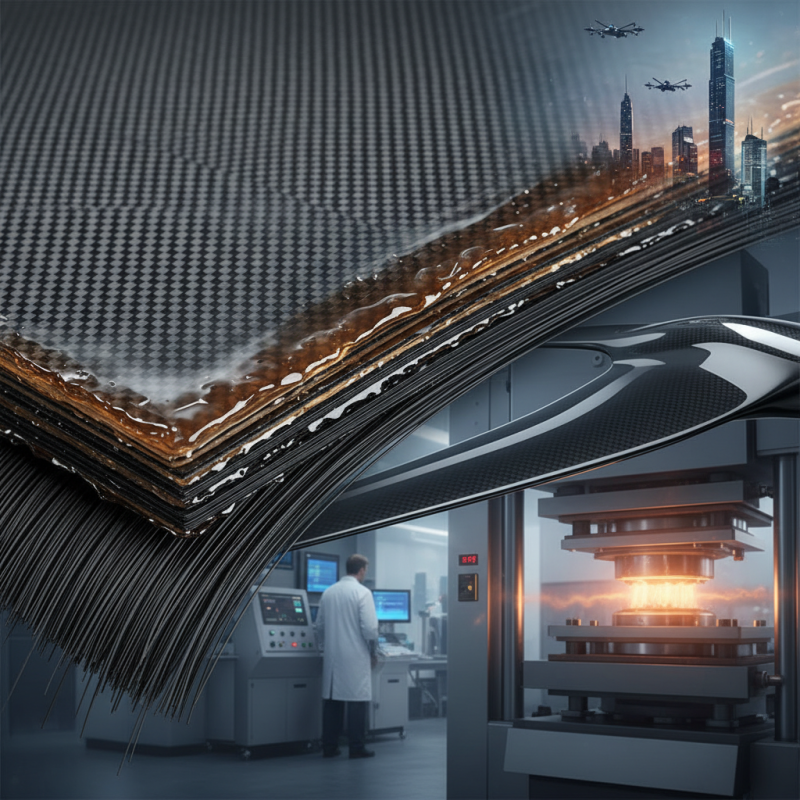
Prepreg carbon fiber is a composite material known for its strength and lightweight characteristics. It consists of carbon fibers pre-impregnated with resin. The resin is partially cured, allowing for easy handling and precise layering during the manufacturing process. This method ensures a uniform distribution of resin, leading to enhanced mechanical properties. The result is a material that is incredibly strong yet lightweight.
One significant advantage of prepreg carbon fiber is its versatility. It is used in various applications, from aerospace to automotive industries. Manufacturers can create complex shapes and designs, tailored specifically for each project. However, working with prepreg can be challenging. The need for controlled temperature and humidity during curing adds complexity to the production process. Improper handling can lead to defects, which can compromise the material's integrity.
Although prepreg carbon fiber offers excellent performance, it is not without drawbacks. The initial cost can be high due to the manufacturing process and raw materials. It requires skilled labor to ensure quality and precision. These factors can be a barrier for some businesses. Yet, for those who prioritize performance and durability, the benefits often outweigh the challenges. Understanding these intricacies is critical for successful applications of prepreg carbon fiber.
Key Components of Prepreg Carbon Fiber Material
Prepreg carbon fiber is increasingly popular in various industries due to its unique composition. The key components of prepreg carbon fiber include carbon fibers, resin, and a release film. Carbon fibers are lightweight but incredibly strong. They offer excellent rigidity and durability, making them ideal for high-performance applications. This combination of strength and lightness is crucial for industries like aerospace and automotive.
The resin used in prepreg helps bind the carbon fibers together. It is typically a thermosetting resin that cures when heated. This curing process ensures that the prepreg material achieves its desired mechanical properties. The release film is another critical element. It protects the layup from contamination during the curing phase. Each layer must align perfectly, as any misalignment can weaken the final product.
Creating prepreg carbon fiber is an intricate process. The ratio of resin to fiber must be meticulously managed to ensure optimal performance. An imbalance can lead to weaker spots. Additionally, the prepreg must be stored under specific conditions to prevent premature curing. This complexity emphasizes the need for precision and expertise in handling this advanced material.
The Process of Manufacturing Prepreg Carbon Fiber
The manufacturing process of prepreg carbon fiber involves several critical stages. Initially, the resin is mixed with carbon fibers to create a composite material. This mixture is then pre-impregnated onto a carrier film, ensuring uniformity in resin distribution. According to a market analysis by Research and Markets, the global prepreg market is expected to reach USD 28 billion by 2025, highlighting the growing importance of this material.
Once the prepreg is produced, it is stored under controlled conditions. This is crucial, as the shelf life of prepreg is limited due to the curing process that begins even at room temperature. Manufacturers often use vacuum bagging techniques to eliminate air pockets, ensuring structural integrity. As a result, components made from prepreg carbon fiber are lightweight yet extremely strong, offering Tensile Strength. However, the efficiency of this manufacturing process can be hampered by the complexities involved in handling and curing.
The final stage is curing, where the prepreg undergoes heat and pressure in an autoclave. This step solidifies the composite, but requires precise temperature control. Even slight deviations can lead to defects. Industry surveys indicate that around 10% of prepreg products experience quality issues during this stage, prompting continual improvements in manufacturing protocols. Such challenges highlight the need for rigorous quality assurance checks throughout the entire process.
Applications of Prepreg Carbon Fiber in Various Industries
Prepreg carbon fiber is a composite material widely used across various industries. Its unique properties make it ideal for applications requiring strength and lightweight construction. Aerospace is one notable sector where prepreg plays a vital role. Aircraft manufacturers utilize it to create fuselages and wings, enhancing fuel efficiency. The automotive industry also benefits, using this material for performance vehicles. The reduced weight helps improve speed and handling.
In sporting goods, prepreg carbon fiber shows its versatility. High-end bicycles and golf clubs often incorporate this material for better performance. Some companies report improved user experience with lighter gear. However, the production process must be carefully monitored. Impurities can compromise strength, and the layering process requires precision.
**Tip:** When working with prepreg materials, ensure temperature control during curing. Proper techniques prevent defects.
Another interesting application is in the medical field. Surgical tools and prosthetics made from prepreg carbon fiber provide strength while remaining lightweight. This allows for more comfortable patient use. Yet, sourcing quality materials can be challenging. A compromise in material selection can lead to subpar performance.
**Tip:** Always test the final product under realistic conditions. Ensuring reliability is key, especially in critical applications.
Applications of Prepreg Carbon Fiber in Various Industries
Advantages and Disadvantages of Using Prepreg Carbon Fiber
Prepreg carbon fiber is increasingly popular in industries like aerospace and automotive. It offers significant benefits, but potential drawbacks exist as well. One major advantage is its high strength-to-weight ratio. According to industry reports, prepreg composites can be up to five times stronger than steel while being substantially lighter. This property allows for more efficient designs, enhancing performance and fuel efficiency.
However, prepreg carbon fiber also has limitations. The manufacturing process can be costly and time-consuming. Prepreg materials require specific storage conditions to maintain their properties. Improper storage may lead to degradation. Additionally, the curing process demands precise control over temperature and pressure, adding complexity to production.
Despite these challenges, the market for prepreg carbon fiber is projected to grow significantly, reaching a value of approximately $5.5 billion by 2027. This growth reflects increasing demand for lightweight and strong materials. Nonetheless, companies must weigh these benefits against the production difficulties inherent to prepreg technology.
FAQS
: Prepreg carbon fiber is a composite material known for its strength and lightweight properties. It consists of carbon fibers pre-impregnated with resin.
Prepreg carbon fiber offers versatility and is used in various industries, such as aerospace and automotive.
Challenges include the need for controlled temperature and humidity during curing and the potential for defects if not handled properly.
Yes, the initial cost can be high due to the complex manufacturing process and skilled labor required.
In aerospace, it is used to create fuselages and wings, enhancing fuel efficiency and strength.
Prepreg carbon fiber is found in high-end bicycles and golf clubs, improving performance with lighter gear.
Ensure temperature control during curing and monitor the layering process to avoid impurities that compromise strength.
Yes, prepreg carbon fiber is used for surgical tools and prosthetics, providing strength while remaining lightweight for comfort.
Always test the final product under realistic conditions to ensure it performs reliably in critical applications.
Compromising material selection can lead to subpar performance in applications where strength and precision are crucial.
Conclusion
Prepreg carbon fiber is a composite material that integrates carbon fibers with a pre-impregnated resin matrix, creating an advanced lightweight and strong medium used in various applications. To understand "what is prepreg carbon fiber and how does it work," it is essential to explore its key components, including high-modulus fibers and thermosetting resins, which provide exceptional mechanical properties. The manufacturing process involves layering the prepreg sheets and curing them under heat and pressure, yielding a durable, lightweight product.
The versatility of prepreg carbon fiber has led to its adoption across multiple industries, including aerospace, automotive, and sports equipment, due to benefits such as high strength-to-weight ratios. However, it is important to consider both advantages and disadvantages, such as cost and manufacturing complexity, when evaluating its use in specific applications. Overall, prepreg carbon fiber represents a significant innovation in material science, offering advantages that align with the demands of modern engineering.

 RAXIS Fiber