Explore our premium grade carbon fiber profiles, custom CNC-machined parts, prepregs, and structural assemblies engineered to meet rigorous aerospace and industrial specifications.
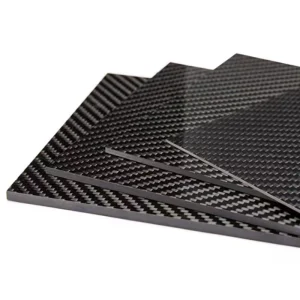
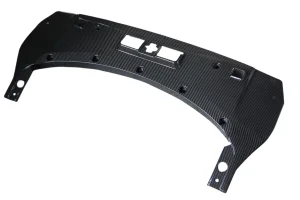
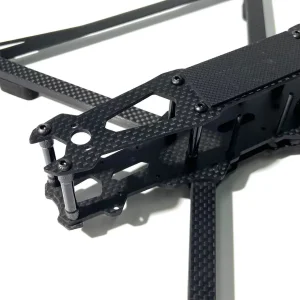
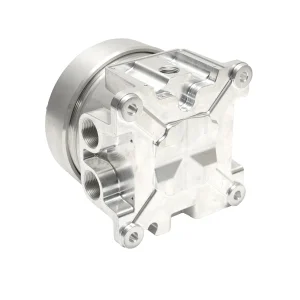
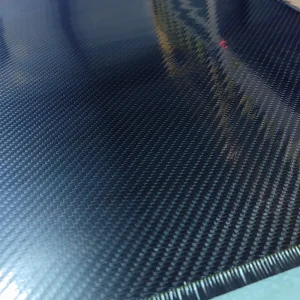
Guangzhou RAXis Fiber Co., Ltd. is a professional manufacturer specializing in carbon fiber sheets, tubes, and custom composite products, delivering lightweight and high-strength solutions for global industries. Based in Guangzhou, China, we integrate research, development, production, and sales to provide advanced carbon fiber materials tailored to diverse application needs.
As the commercial aerospace sector accelerates towards net-zero targets and tactical unmanned aerial systems (UAS) demand extended loiter times, weight reduction has emerged as the definitive engineering frontier. High-performance carbon fiber reinforced polymers (CFRP) represent the baseline for next-generation structural architectures, offering unparalleled mechanical performance and dimensional stability under extreme environmental conditions.
Our product portfolio includes carbon fiber sheets, tubes, plates, CNC-machined parts, and customized composite components widely used in aerospace, automotive, drones, sports equipment, and industrial structures. With a focus on precision engineering and material innovation, we ensure each product offers excellent strength-to-weight ratio, corrosion resistance, and long-term durability.
Pioneering the next generation of thermoset and thermoplastic carbon fiber structures to meet the thermal and stress boundaries of hypersonic flight and orbital applications.
Modern aerospace structures demand a careful balance between raw tensile modulus and toughness. Historically, standard epoxy matrices served the market sufficiently. However, the trajectory of modern aeronautical engineering has pushed the industry toward advanced thermoplastic matrices, including Polyether ether ketone (PEEK) and Polyetherketoneketone (PEKK), alongside ultra-high-temperature bis-maleimide (BMI) resins. These matrix variations allow structural elements to perform reliably at elevated glass transition temperatures (Tg) exceeding 250°C, while providing significantly improved impact resistance and micro-cracking mitigation.
Guangzhou RAXis Fiber Co., Ltd. continues to expand its technology stack toward automated dry fiber placement, out-of-autoclave (OOA) curing mechanisms, and co-curing complex assemblies. By co-curing ribs, spars, and skin panels simultaneously, we eliminate the reliance on heavy mechanical fasteners, reducing structural mass by up to 15% and eliminating stress concentration points that lead to fatigue failure.
Integration of PEEK, PEKK, and PPS resin systems for high fracture toughness, weldability, and recyclability. Perfect for aerospace brackets, fairings, and high-wear structural interfaces.
Vacuum-bag-only (VBO) processing matrices that reduce capital equipment costs while maintaining void levels below 1.5%, providing consistent structural integrity for large aerospace components.
Interwoven copper or bronze micro-mesh grids embedded into the outermost composite layers, creating an integrated Faraday cage to safely dissipate high-voltage atmospheric strikes.
Custom tailored structural solutions addressing unique weight, load, and thermal requirements across commercial, defense, and spatial exploration sectors.
| Sector Category | Common Applications | Performance Driver | Material Configuration |
|---|---|---|---|
| Commercial Aviation | Fuselage frames, pressure bulkheads, floor beams, secondary fairings | Weight reduction for fuel economy, fatigue life optimization | T300/T700 grade prepreg, epoxy matrix, autoclave cured |
| Tactical & Commercial UAVs | Wing spars, boom tubes, chassis plates, integrated camera gimbals | Maximum loiter time, structural stiffness to resist bending moments | 3K twill/plain panels, high modulus unidirectional spars |
| Space & Satellite Systems | Payload adapters, solar array substrates, optical benches | Near-zero Coefficient of Thermal Expansion (CTE), low outgassing | M40J/M55J ultra-high modulus fibers, cyanate ester resins |
| Urban Air Mobility (eVTOL) | Rotor blades, battery enclosures, cabin structures | Impact attenuation, crashworthiness, acoustic damping properties | Hybrid carbon-aramid (Kevlar) laminates, flame-retardant resins |
In addition to traditional carbon fiber architectures, our capabilities extend to hybrid composite systems. By strategically weaving high-modulus carbon fibers with aramid or high-density glass fibers, we deliver structures with customized fracture pathways. This is crucial for safety-critical components such as commercial aircraft fairings, eVTOL landing gear struts, and rotorcraft blades where catastrophic, unannounced failures are unacceptable. Our material optimization software allows us to orient plies precisely to counter multi-directional load vectors.
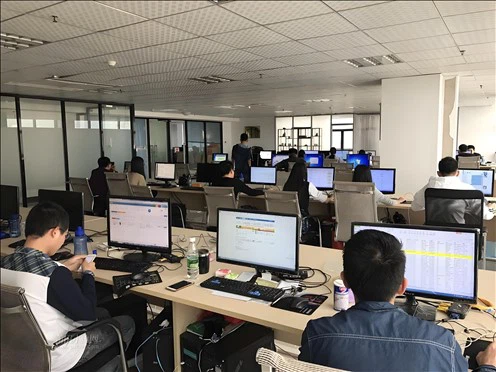
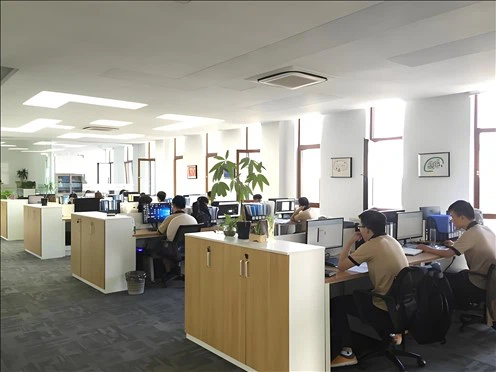
Guangzhou RAXis Fiber Co., Ltd. operates state-of-the-art production floors designed around efficiency, vertical integration, and deep quality control. Our facility bridges raw fabric weaving, specialized matrix prepregging, autoclave forming, and custom CNC post-machining under a single, unified oversight structure. This minimizes external logistics dependencies, reduces the risk of material contamination, and enables rapid scaling from prototype to production volumes.
Equipped with modern production facilities and experienced technical teams, RAXis Fiber maintains strict quality control throughout the entire manufacturing process, from raw material selection to final inspection. We also provide flexible OEM and ODM services, supporting clients with custom designs, rapid prototyping, and scalable production.
Our vertical integration ensures that we secure raw PAN precursors at stable cost structures, insulating our global clients from volatile supply shocks. Driven by continuous innovation and customer-oriented service, we are committed to delivering reliable products, competitive pricing, and efficient lead times. Guangzhou RAXis Fiber Co., Ltd. strives to be a trusted partner in providing lightweight composite solutions that enhance performance and efficiency across multiple industries worldwide.
Meeting international engineering standards and offering seamless export compliance documentation to safeguard international projects.
Our quality management workflow follows strict AS9100 standards for aerospace components. We provide complete trace certificates for raw materials, fiber spools, and resin batches to satisfy rigorous verification steps.
To guarantee zero-defect shipments, we employ Ultrasonic C-scan, X-ray laminography, and digital shearography inspections. This detects internal voids, interlaminar delamination, and dry patches prior to component shipping.
Because our R&D and manufacturing occur in Guangzhou, China, our proprietary carbon fiber composites are classified as ITAR-free. This simplifies regulatory compliance for international civilian aviation and global aerospace programs.
Our testing facilities are fully calibrated to simulate hostile aerospace environments. We perform thermal cycling analysis (ranging from -60°C to 180°C), mechanical stress tests (tensile, compression, shear, and flexural limits), and flame-retardancy evaluations. By verifying these performance envelopes locally, we eliminate the risk of product non-conformance when components arrive at your assembly facilities.
A comprehensive technical guide for procurement departments, project managers, and lead systems integrators sourcing structural carbon fiber components.
Sourcing carbon fiber for aerospace and mission-critical industries is not a typical off-the-shelf purchase. It requires careful alignment of technical, regulatory, and quality requirements. Procurement agencies must collaborate closely with design engineers to draft Request for Proposals (RFPs) that clearly detail all mechanical and performance specifications. Key elements include detailing fiber strain-to-failure ratios, resin cure schedules, tooling dimensional tolerances, and exact surface finish profiles.
Furthermore, evaluating a manufacturer's tooling capabilities is critical. For high-tolerance aerospace parts, choosing Invar tooling is highly recommended to align thermal expansion values, preventing dimensional distortion during thermal processing in autoclaves. When sourcing from China, verifying raw material channels ensures that the carbon precursors originate from recognized, high-grade filament manufacturers.
Provide structural CAD models (.STEP/.IGES) detailing load paths, ply counts, fiber orientation angles (0°/±45°/90°), and resin-to-fiber volume ratio specifications.
Define paint, gel coat, or peel-ply surface treatments. For aerospace parts exposed to dynamic airflow, indicate whether composite edge-sealing is required to prevent moisture penetration.
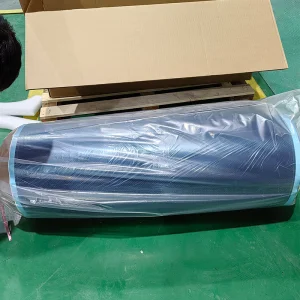
Large panels and thin-walled tubes require bespoke crate layouts. Ensure shipments include custom structural supports, vacuum-packing, and desiccants to maintain zero moisture exposure during transit.
Expert technical answers regarding structural mechanical properties, manufacturing techniques, and sourcing logistics.
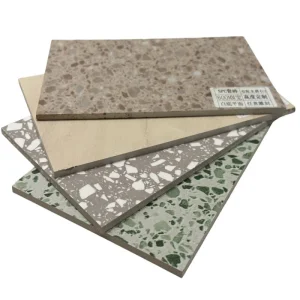
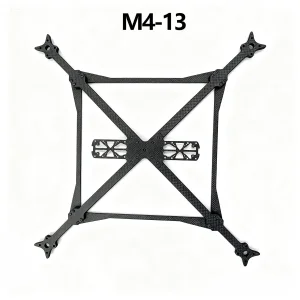
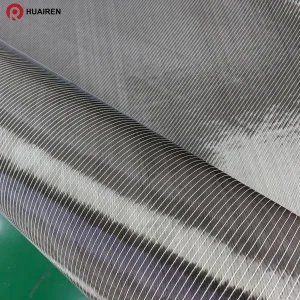
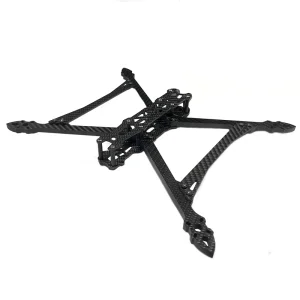
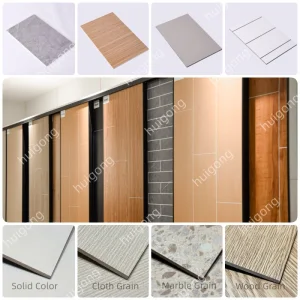
Review our specialized materials including decorative structures, drone components, carbon prepregs, and performance plastics tailored for diverse industrial projects.

 RAXIS Fiber