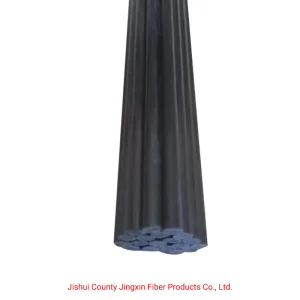
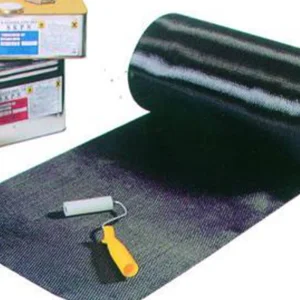
Explore our foundational array of custom-engineered solutions, high-strength raw materials, and precision molded assemblies manufactured under comprehensive quality controls to serve demanding industrial frameworks.
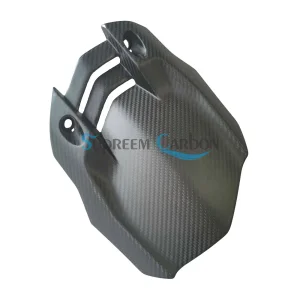
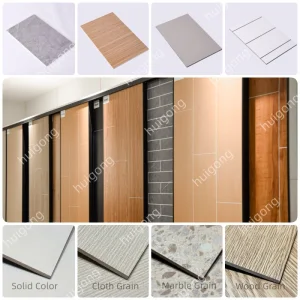
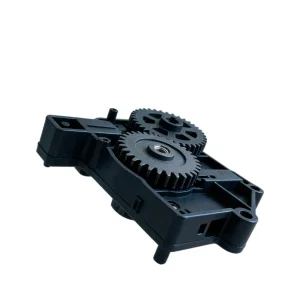
Guangzhou RAXis Fiber Co., Ltd. is a premier, highly specialized manufacturer pioneering the engineering, design, and multi-scale fabrication of advanced carbon fiber sheets, tubes, and custom composite products. Our core mission is delivering elite, high-performance, lightweight, and ultra-high-strength solutions specifically engineered for a vast spectrum of global industrial sectors. Based in the industrial manufacturing center of Guangzhou, China, we operate as a fully integrated enterprise uniting core foundational research, multi-disciplinary development, state-of-the-art material synthesis, high-tolerance production, and international commercial sales. This robust structure enables us to provide optimized carbon fiber materials and high-precision assemblies tailored explicitly to satisfy the most demanding application parameters of our worldwide client base.
"By integrating multi-axial continuous carbon fiber filaments within optimized polymer matrices, RAXis Fiber delivers unmatched structural optimization, ensuring our electrical enclosures and structural sub-assemblies operate flawlessly under extreme mechanical, thermal, and electromagnetic stresses."
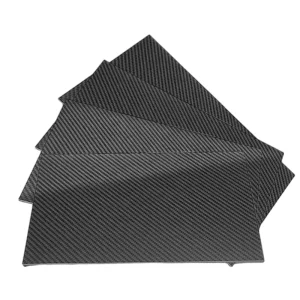
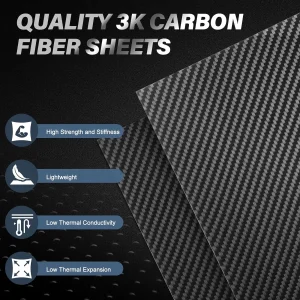
Our diverse and expansive product portfolio includes high-grade carbon fiber sheets, specialized architectural tubes, complex structural plates, micron-tolerance CNC-machined parts, and highly engineered customized composite components. These components are strategically deployed within rigorous application environments across the aerospace, automotive engineering, unmanned aerial systems (UAS/Drones), competitive professional sports apparatus, and vital heavy industrial structures. By focusing fundamentally on precision engineering, polymer matrix innovation, and automated material alignment, we ensure that every single product emerging from our facility delivers an unmatched strength-to-weight ratio, exceptional corrosion resistance, superior thermal stability, and prolonged lifecycle dependability in the field.
Equipped with modern, climate-controlled clean-room production facilities and staffed by senior composites engineering teams, RAXis Fiber maintains rigid, uncompromising quality control protocols throughout the entirety of the manufacturing chain—stretching from the initial validation of aerospace-grade raw carbon precursors to final ultra-sonic inspection and coordinate measuring machine (CMM) dimensional validation. Acknowledging the highly unique architectural configurations required by modern technology firms, we offer flexible, comprehensive OEM and ODM services. This enables us to support global industrial procurement agents with tailored structural designs, rapid non-destructive prototyping, custom mold tooling engineering, and agile, high-volume scalable manufacturing runs.
In the modern industrial ecosystem, leading enterprise entities across North America, the European Union, and the Asia-Pacific region are systematically executing transition mandates away from heavy, corrosion-susceptible metallic alloys toward advanced Carbon Fiber Reinforced Polymers (CFRP). Within the electrical engineering and infrastructure spaces, the demand for custom carbon fiber electrical enclosures has reached an inflection point. Traditional materials such as stainless steel, cast aluminum, and fiberglass (FRP) are increasingly failing to meet the complex multi-variable constraints imposed by next-generation technical installations.
Procurement analysis indicates that global tier-1 enterprises require enclosures that offer profound weight reduction to minimize structural load overhead on marine vessels, high-speed rail trains, and aerospace platforms, while simultaneously demanding an impervious defense against harsh ambient environments. Carbon fiber enclosures inherently supply this mitigation, demonstrating superb resistance to galvanic corrosion, hypersaline marine air, caustic chemical vapors, and relentless UV degradation. Consequently, global procurement directors leverage these advanced attributes to significantly suppress total cost of ownership (TCO), minimize field inspection overheads, and guarantee the absolute protection of critical internal telemetry, control modules, and power distribution electronics.
The strategic deployment of carbon fiber electrical enclosures addresses critical pain points across diverse macro-economic industries, ensuring uninterrupted performance where standard junction boxes fail:
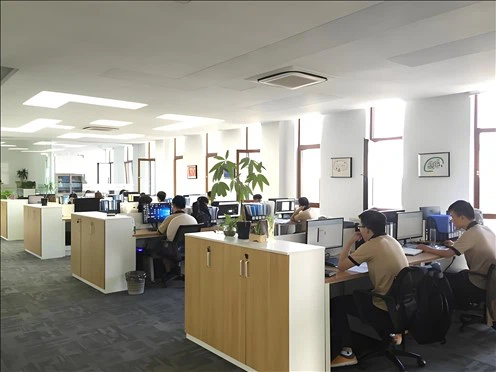
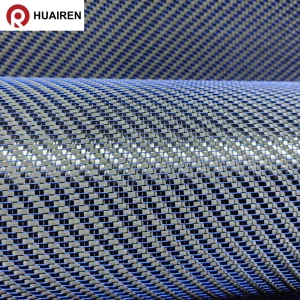
Figure 1: RAXis Fiber Advanced Filament Processing and Autoclave Preparation Area
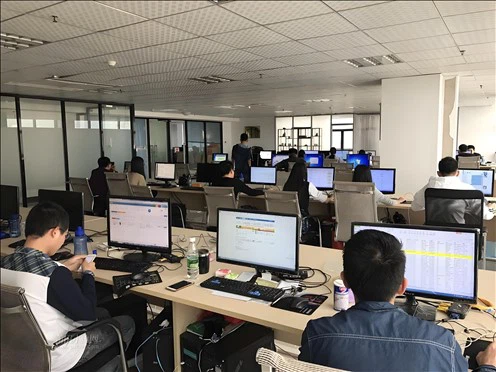
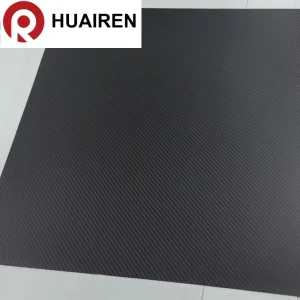
Figure 2: Comprehensive Multi-Axial Destructive and Non-Destructive Quality Analysis
A rigorous inspection of our proprietary mechanical treatments, architectural shielding methodologies, and continuous structural innovations designed to provide maximum information gain and technical superiority.
Standard plastics pass electromagnetic waves completely, while untreated composites provide limited attenuation. RAXis integrates highly conductive metallic micro-meshes, nickel-coated carbon veils, or vapor-deposited silver internal treatments directly into the composite laminate architecture during layup. This achieves verifiable shielding attenuation ratings exceeding 85dB across 10MHz to 18GHz frequencies, protecting delicate inner processors from intense external electromagnetic field disturbances.
Electrical gear generates high localized thermal loads. Standard composites can exhibit poor out-of-plane thermal conductivity, causing critical heat buildup. Our engineering team utilizes advanced graphene-doped epoxy resin matrices paired with integrated localized solid metal heat sinks. This composite allows the enclosure walls to actively conduct thermal energy away from internal electronic chips, providing structural support and acting as a passive radiator.
By engineering complex, pseudo-isotropic fiber stacking sequences (combining 0°, 90°, and ±45° fiber orientations), RAXis boxes satisfy extreme structural requirements. They resist shattering from sudden point-source impacts or intense structural vibration profiles. This mechanical benefit makes them suitable for use alongside mining excavation equipment, seismic research arrays, and defense vehicles operating in rugged terrain.
Every custom enclosure design undergoes multi-variable digital stress mapping. We calculate exact ply orientation schedules, stress distribution plots, and simulated thermal loads before machining composite tool molds, preventing laminate shifting and resin pooling.
Utilizing elevated pressures (exceeding 6 Bar) and precise computer-controlled curing profiles, we eliminate internal micro-voids, elevating interlaminar shear strength and ensuring strict density parameters across the chassis walls.
Precision multi-axis CNC routers shape connector pathways, cutouts, and gasket tracks within a tolerance of ±0.05mm. Liquid silicone gaskets are then applied to meet long-term IP67/IP68 ingress protection standards.
Industrial-grade installations require strict compliance with safety frameworks. Guangzhou RAXis Fiber Co., Ltd. builds and verifies enclosures to satisfy international manufacturing and environmental standards.
Our manufacturing processes align with the ISO 9001:2015 Quality Management Framework. Every production batch is fully traceable from the base chemical resin and carbon tow batches up to the final packed enclosure assembly.
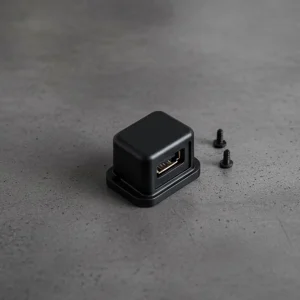
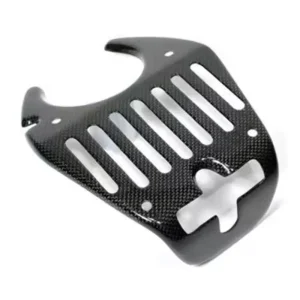
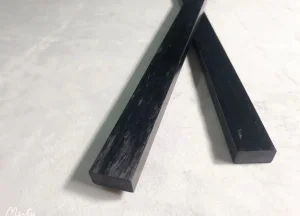
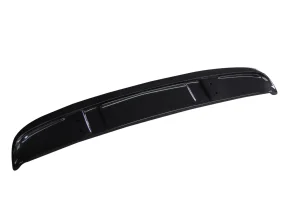
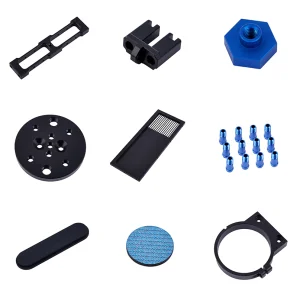
Review our secondary array of precision-manufactured carbon fiber assemblies, custom structural elements, and lifestyle integrations built to the same strict tolerances as our heavy industrial lines.
Essential technical engineering insights and procedural procurement details resolving vital architectural questions for corporate procurement managers and engineering specialists.
While carbon fiber exhibits inherent electrical conductivity, it does not possess the same low-resistance ground pathway characteristics as traditional copper or steel panels. To guarantee absolute grounding protection for high-voltage internal arrays, RAXis integrates micro-engineered copper ground tracks, surface-bonded brass terminal points, or metal inserts directly into the structural frame during the compression molding phase. This design ensures safe discharge paths while maintaining galvanic isolation between the internal circuit terminals and the carbon fiber frame, preventing localized galvanic corrosion.
Our engineering team works with standard digital modeling formats, including STEP, IGES, SolidWorks (SLDPRT), and AutoCAD DWG files. For specialized ODM projects, clients provide basic volumetric constraints, required weight limitations, target impact metrics (IK ratings), expected thermal dissipation profiles, and targeted IP/NEMA sealing levels. Our team generates a comprehensive design proposal, including full finite element analysis (FEA) testing, layer stack-up configurations, and tooling blueprints before fabrication begins.
While the initial capital expenditure for a precision carbon fiber enclosure can exceed that of a standard steel box, the total cost of ownership (TCO) across a typical 25-year operational lifecycle is lower. Carbon fiber enclosures completely eliminate recurring costs for sandblasting, rust-inhibiting recoating, and structural weld repairs in harsh coastal or chemical processing environments. Furthermore, the 65% reduction in weight minimizes installation labor costs and crane rental fees, while lowering structural load margins on offshore platforms and specialized mobile vehicles.
Every single manufactured unit is subjected to a rigid quality testing protocol. This includes ultra-sonic non-destructive scanning to identify potential interlaminar micro-voids, CMM coordinate measurements to verify critical seal groove tolerances, flammability testing, and hydrostatic pressure testing to confirm IP68 sealing effectiveness. Each batch ships with a full material traceability certificate, compliance declarations for RoHS and REACH, and a detailed performance inspection report.
 RAXIS Fiber