Explore high-strength, low-weight carbon fiber functional textiles and precision-machined components manufactured to aerospace and industrial standards.
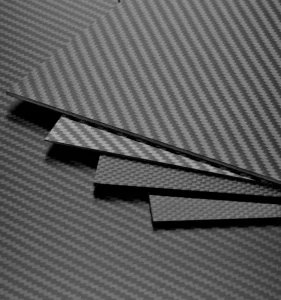



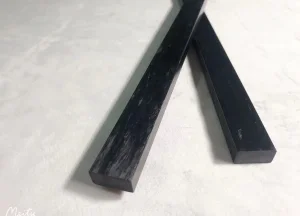
Analyzing the shifting paradigm from traditional metals to advanced carbon composite functional materials across global industrial sectors.
The global marketplace for advanced composite materials is undergoing a profound structural shift. Driven by aggressive carbon-neutrality mandates, electric vehicle (EV) mass adoption, commercial aerospace expansion, and high-frequency automated industrial machinery, demand for carbon fiber functional textiles, prepregs, and structural plates has reached an unprecedented high. Carbon fiber—often hailed as the ultimate structural material—combines extreme tensile strength (exceeding 4,900 MPa in standard intermediate modulus grades) with ultra-low density (approx. 1.75–1.80 g/cm³), rendering traditional materials like structural steel and aluminum alloys obsolete in performance-critical applications.
Technical Insight: Carbon fiber textiles are no longer restricted to aerospace structural spars. Today’s functional textiles incorporate specialized weaving patterns (3K, 6K, 12K, 24K tow sizes), hybrid glass-carbon weaves, unidirectional prepregs, and carbon crystal thermal conductive films designed for smart building systems and high-precision electronic housings.
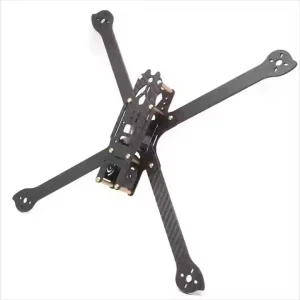
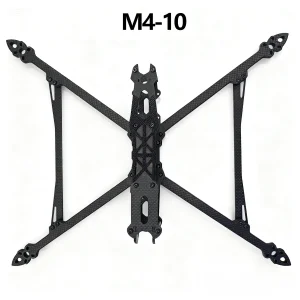
Unmanned Aerial Vehicles (UAVs), tactical FPV drone frames, and commercial aircraft components demand structural stiffness (High Modulus carbon) and fatigue limits far surpassing metallic alloys under dynamic aerodynamic loading.
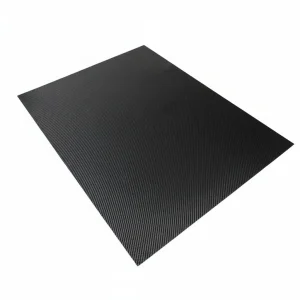
Race car chassis panels, custom aerodynamic splitter kits, and EV battery module enclosures utilize autoclaved and compression-molded carbon fiber plates to maximize energy density and structural safety.
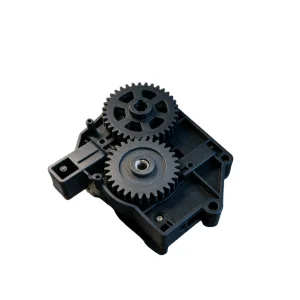
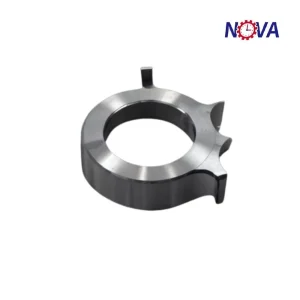
High-speed gantry robot arms, specialized electronic housings, and high-tolerance CNC parts benefit from non-deforming dimensional stability and extremely low Coefficient of Thermal Expansion (CTE).
Understanding the fundamental engineering properties governing China carbon fiber functional textiles and composite structures.
Selecting the optimal carbon fiber functional textile requires a deep technical understanding of polyacrylonitrile (PAN) precursor quality, filament count (Tow Size), weaving geometry, and resin chemistry. As premier exporters from China, leading manufacturers engineer composite architectures tailored precisely to mechanical loads, operating temperature ranges, and environmental exposures.
The standard benchmark for structural composite plates and prepregs relies on Japanese Industrial Standards (JIS) or Toray equivalence. The table below highlights key performance metrics critical for procurement engineers when evaluating composite raw materials:
| Fiber Grade Type | Tensile Strength (MPa) | Tensile Modulus (GPa) | Elongation (%) | Density (g/cm³) | Primary Application Focus |
|---|---|---|---|---|---|
| T300 Standard Grade | 3,530 MPa | 230 GPa | 1.5% | 1.76 g/cm³ | Consumer goods, sporting gear, standard architectural trim, structural plates. |
| T700 Intermediate Grade | 4,900 MPa | 230 GPa | 2.1% | 1.80 g/cm³ | FPV racing drone arms, race car monocoques, high-pressure vessels, aerospace parts. |
| T800 High-Strength Grade | 5,490 MPa | 294 GPa | 1.9% | 1.81 g/cm³ | Primary aerospace flight structures, high-end defense components, specialized CNC components. |
| M40J High Modulus | 4,410 MPa | 377 GPa | 1.2% | 1.77 g/cm³ | Precision satellite reflectors, optical benches, zero-flex robotic automation beams. |
The structural behavior of woven carbon textiles depends heavily on the orientation and intersection of warp and weft fibers. Leading Chinese exporters offer several standard fabric configurations:
Unpacking the supply chain, rapid prototyping, and technological edge of China's composite manufacturing clusters.
China has firmly established itself as the global epicenter for composite material manufacturing and functional textile processing. Sourcing from premier Chinese suppliers provides international enterprise buyers with distinct commercial and operational advantages:
From precursor spinning and carbonization to resin formulation, prepreg impregnation, and multi-axis CNC routing, China’s industrial ecosystem eliminates intermediate markups and minimizes supply chain lead times.
Utilizing high-speed 5-axis CNC machining centers and rapid tooling techniques, Chinese factories transform client CAD models (STEP/IGES) into finished carbon composite prototypes within 48 to 72 hours.
Top-tier suppliers strictly adhere to ISO 9001 and AS9100 quality control protocols. Advanced Non-Destructive Testing (NDT) such as ultrasonic A-scan inspections ensures void-free composite structures.
A step-by-step engineering procurement framework for global buyers procuring composite plates, tubes, and custom tooling.
Procurement Checklist: Always verify precursor origin, epoxy resin glass transition temperature ($T_g$), fiber volume fraction ($V_f \ge 60\%$), surface finish requirements, and ultrasonic void percentage prior to approving mass production runs.
Leading the market in advanced carbon fiber sheets, specialized tubes, and precision CNC composite engineering.
Guangzhou RAXis Fiber Co., Ltd. is a professional manufacturer specializing in carbon fiber sheets, tubes, and custom composite products, delivering lightweight and high-strength solutions for global industries. Based in Guangzhou, China, we integrate research, development, production, and sales to provide advanced carbon fiber materials tailored to diverse application needs.
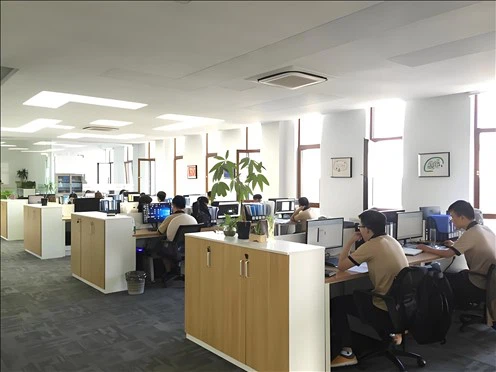
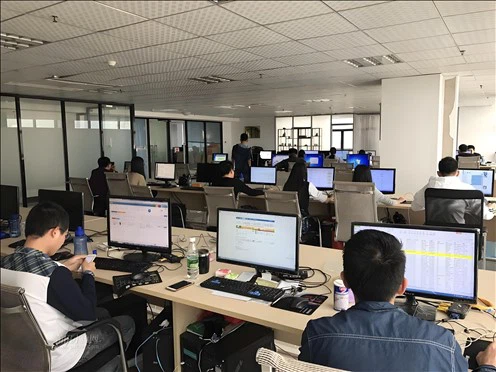
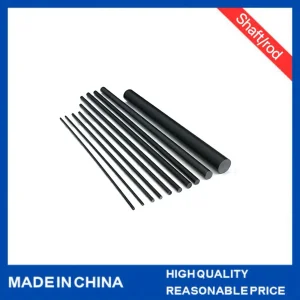
Our product portfolio includes carbon fiber sheets, tubes, plates, CNC-machined parts, and customized composite components widely used in aerospace, automotive, drones, sports equipment, and industrial structures. With a focus on precision engineering and material innovation, we ensure each product offers excellent strength-to-weight ratio, corrosion resistance, and long-term durability.
Equipped with modern production facilities and experienced technical teams, RAXis Fiber maintains strict quality control throughout the entire manufacturing process, from raw material selection to final inspection. We also provide flexible OEM and ODM services, supporting clients with custom designs, rapid prototyping, and scalable production.
Driven by continuous innovation and customer-oriented service, we are committed to delivering reliable products, competitive pricing, and efficient lead times. Guangzhou RAXis Fiber Co., Ltd. strives to be a trusted partner in providing lightweight composite solutions that enhance performance and efficiency across multiple industries worldwide.
Next-generation composite innovations reshaping lightweight structural designs and sustainable manufacturing.
Transitioning from thermoset epoxies to thermoplastic matrices (PEEK, PPS, CFRTP) enabling fully recyclable carbon fiber components with rapid thermal stamping production capabilities.
Integrating carbon nano-grain structures into architectural wall panels and PVC/WPC ceiling panels to create self-heating, structurally durable indoor surfaces with high infrared radiant heat efficiency.
Embedding piezoelectric sensors and micro-battery cells directly inside carbon fiber layup textiles for continuous structural health monitoring in aerospace and EV applications.
Expert engineering answers to standard procurement and structural application questions.
T300 carbon fiber is a standard-modulus material offering a tensile strength of approximately 3,530 MPa. T700 is an intermediate-modulus fiber providing a significantly higher tensile strength of roughly 4,900 MPa with superior shear resistance. While T300 is suitable for standard cosmetic and structural uses, T700 is preferred for critical high-stress applications such as drone arms, race car parts, and aerospace components.
Prepreg is carbon fiber fabric pre-impregnated with a partially cured epoxy resin matrix (B-stage). Because epoxy resins react at room temperature over time, prepreg fabrics must be shipped and stored at frozen temperatures (-18°C / 0°F) to halt the curing process until they are ready to be consolidated in an autoclave or heat press mold.
Using high-precision multi-axis CNC routers and diamond-coated milling tooling tailored for composite materials, we routinely achieve dimensional tolerances as tight as ±0.05 mm for plate thickness and hole diameter concentricity.
Carbon crystal panels combine PVC/WPC micro-foamed substrates with active carbon crystal particle layers. This functional textile application delivers exceptional scratch resistance, 100% moisture-proofing, zero formaldehyde emission, and efficient thermal insulation or radiant heating for modern 3D interior architecture.
Yes. Guangzhou RAXis Fiber provides end-to-end OEM and ODM manufacturing services. Clients can submit CAD drawings or physical samples, and our engineering team handles custom lay-up schedules, compression mold design, high-precision CNC cutting, chamfering, countersinking, and surface clear-coating.
We offer four standard surface finishes: 3K Twill Glossy, 3K Twill Matte, 3K Plain Glossy, and 3K Plain Matte. Specialized texturized anti-slip or un-sanded peel-ply finishes can also be applied for secondary bonding applications.
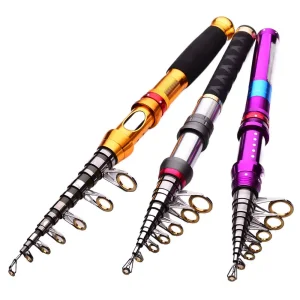
Browse through our extended lineup of carbon fiber components, sports equipment, drone kits, and electronic housings.


 RAXIS Fiber