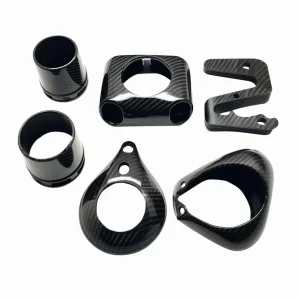
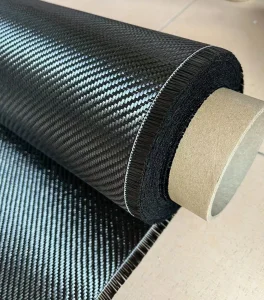
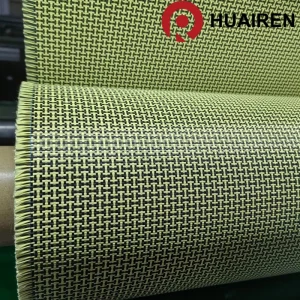
Explore our primary array of custom-engineered carbon fiber sheets, structural components, and high-temperature graphite interfaces designed for critical operating environments.
The global composites industry is undergoing a structural paradigm shift. Once limited to elite aerospace projects and premium defense frameworks, Carbon Fiber Reinforced Polymer (CFRP) composites have now established a core footprint in mainstream industrial applications. As industries aggressively pursue decarbonization, energy efficiency, and lightweight structural properties, carbon fiber acts as a primary material lever.
Key technical macro trends currently steering the industry include:
"As structural demands evolve, traditional metals fail under the weight-to-performance challenges of modern automation, aerospace operations, and high-frequency movement. Utilizing high-modulus fibers (T700 and T800 grades) paired with customized resin formulations provides a quantum leap in tensile and flexural properties."
To aid procurement engineers in sourcing the correct specifications for high-load applications, the matrix below details our production and fabrication standards.
| Fiber Grade / Class | Tensile Strength (MPa) | Tensile Modulus (GPa) | Density (g/cm³) | Primary Commercial Use Cases |
|---|---|---|---|---|
| T300 (Standard Modulus) | 3,530 - 3,800 | 230 - 240 | 1.76 | Standard industrial frames, consumer electronics, simple 3K woven sheets. |
| T700 (High Strength) | 4,900 - 5,100 | 240 - 250 | 1.80 | High-altitude drone arms, pressure vessels, automotive structural components. |
| T800 (Intermediate Modulus) | 5,490 - 5,800 | 290 - 300 | 1.81 | Aerospace structures, critical defense frames, premium UAV structural components. |
| C-C (Carbon-Carbon) | Varies based on design | 100 - 150 | 1.65 - 1.90 | High-temperature vacuum furnaces, semiconductor susceptors, braking systems. |
Industrial sourcing is no longer purely about finding the lowest cost per kilogram. Modern B2B procurement managers, supply chain directors, and design engineers focus on precise structural indicators, testing compliance, and long-term delivery assurances.
High-speed assembly lines and robotic applications require CNC tolerances matching up to ±0.05 mm. Standard carbon fiber sheets and custom-machined parts must undergo continuous verification to prevent component mismatch during industrial integration.
Components utilized in automotive, railway transit, or high-vacuum heat zones must comply with global fire protection standards (like UL94 V-0 or specific aerospace flammability indexes) to ensure structural safety under extreme thermal exposure.
When carbon fiber parts interface directly with structural metals like aluminum or steel, galvanic corrosion can occur. Buyers prioritize manufacturers who incorporate isolation layers, such as specialized fiberglass plies or tailored resin coatings.
As a premium composite manufacturer located in Guangzhou, Guangzhou RAXis Fiber Co., Ltd. leverages a unified regional industrial base, high-speed automated equipment, and a deep supply chain system to guarantee reliable deliveries and superior product specifications.
Guangzhou RAXis Fiber Co., Ltd. is a professional manufacturer specializing in carbon fiber sheets, tubes, and custom composite products, delivering lightweight and high-strength solutions for global industries. Based in Guangzhou, China, we integrate research, development, production, and sales to provide advanced carbon fiber materials tailored to diverse application needs.
Our structural approach ensures that from fiber selection to composite curing, autoclave operations, and precision CNC milling, every parameter is monitored. This high-efficiency manufacturing workflow reduces lead times by up to 30% compared to traditional western suppliers, while maintaining strict ASTM quality benchmarks.
Carbon fiber is not a one-size-fits-all solution. Different industrial environments demand targeted composite configurations to maximize operational lifetimes.
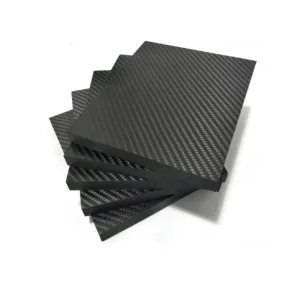
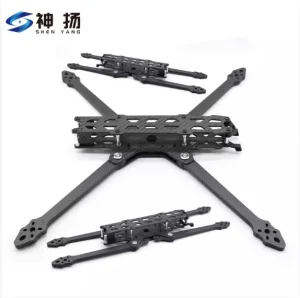
Aerospace structural applications demand materials with high rigidity and minimal weight. Utilizing high-strength carbon fiber prepreg sheets (such as T700/T800 plain or twill weaves) ensures drone frames can withstand torsional flight stresses and high-speed impacts without structural failure.
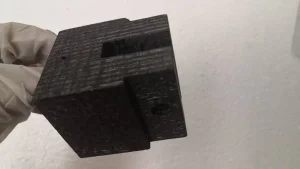
Standard metallic components undergo deformation, creep, and oxidation in high-temperature heating zones. Carbon-Carbon (C/C) connecting parts and customized structural graphite components retain their strength properties in inert atmospheres up to 2000°C.
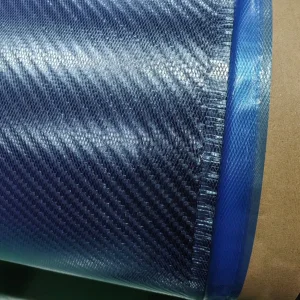
From 600GSM twill carbon fiber cloths to hybrid Kevlar/Aramid weaves, automotive structural integrations demand advanced vibration damping, superior strength-to-weight margins, and energy absorption during impact situations.
Explore answers to common questions about carbon fiber properties, selection criteria, and customization workflows.
The core differences lie in tensile strength and tensile modulus. T300 is the standard structural grade, sufficient for consumer goods and general structures. T700 increases tensile strength substantially (up to 4900 MPa) and is preferred for pressure vessels and high-performance UAVs. T800 is an intermediate modulus fiber, offering the highest rigidity and load-bearing performance for military-grade or aerospace applications.
Unlike standard steel or ceramic components that become brittle or melt under extreme heat, C/C composites improve their mechanical properties as temperatures rise. They display low thermal expansion coefficients, excellent thermal shock resistance, and high structural integrity in heat zones up to 2000°C.
We offer fully integrated OEM and ODM services. Customers provide CAD or 3D step files, and our engineering team reviews the fiber layup, fabric orientation, and curing parameters. Using advanced 5-axis CNC machining, we quickly produce precision prototypes, enabling fast design verification prior to high-volume manufacturing.
For standard dimensions of sheets and tubes, we maintain inventory that can ship within 3-5 working days. For custom CNC-machined components and complex composite configurations, the lead time typically ranges from 15 to 25 days depending on the structural complexity and raw material requirements.
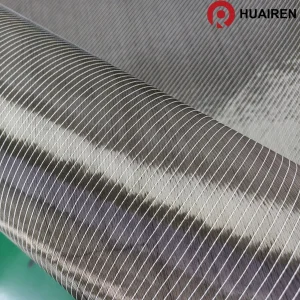
Explore our selection of specialized structural rods, reinforced prepregs, high-strength fabric weaves, and customized aerospace components designed for long-term durability.
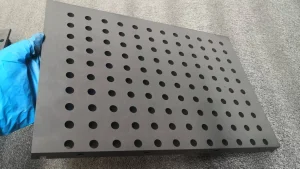
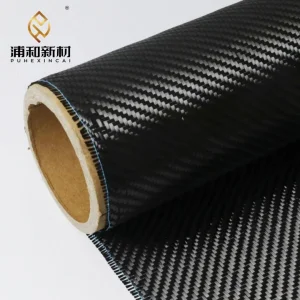
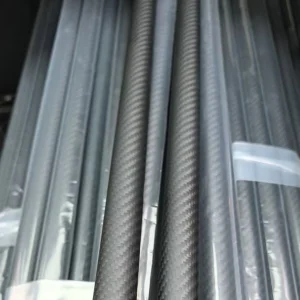
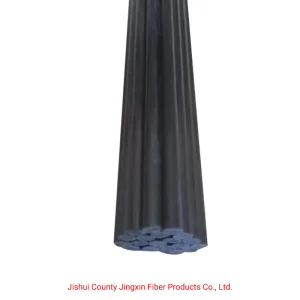
Our product portfolio includes carbon fiber sheets, tubes, plates, CNC-machined parts, and customized composite components widely used in aerospace, automotive, drones, sports equipment, and industrial structures. With a focus on precision engineering and material innovation, we ensure each product offers excellent strength-to-weight ratio, corrosion resistance, and long-term durability.
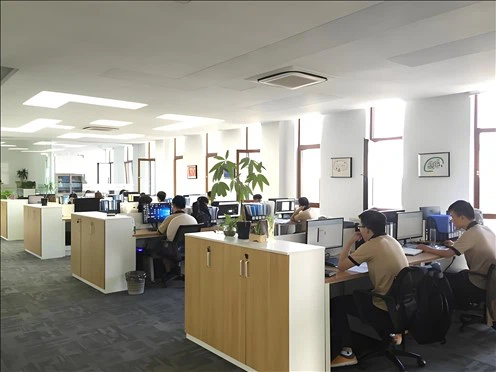
Equipped with modern production facilities and experienced technical teams, RAXis Fiber maintains strict quality control throughout the entire manufacturing process, from raw material selection to final inspection. We also provide flexible OEM and ODM services, supporting clients with custom designs, rapid prototyping, and scalable production.
Driven by continuous innovation and customer-oriented service, we are committed to delivering reliable products, competitive pricing, and efficient lead times. Guangzhou RAXis Fiber Co., Ltd. strives to be a trusted partner in providing lightweight composite solutions that enhance performance and efficiency across multiple industries worldwide.
 RAXIS Fiber