Explore our state-of-the-art carbon fiber assemblies, custom composites, and precision-engineered plastic materials tailored for extreme mechanical performance.
Modern engineering paradigms are shifting rapidly from heavy metal alloys to advanced Carbon Fiber Reinforced Polymers (CFRP). Across aerospace, automotive, medical, and robotics sectors, weight optimization directly equates to energy efficiency, reduced carbon emissions, and enhanced dynamic performance.
Did you know? Every 10% reduction in vehicle weight translates to an estimated 6-8% improvement in overall fuel economy and EV battery range, making precision OEM carbon fiber components a critical design benchmark.
Currently, the carbon fiber composite market is experiencing exponential growth, driven by the demand for higher strength-to-weight ratios. Industrial systems require high stiffness-to-weight attributes to decrease rotational inertia in high-speed mechanisms, while aerospace frameworks mandate materials capable of resisting extreme thermal gradients and structural fatigue. OEMs must align with manufacturers that provide certified chemical properties, precise ply alignment, and custom resin formulations.
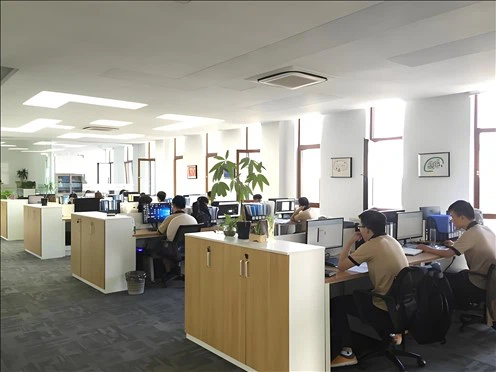
Guangzhou RAXis Fiber Co., Ltd. is a professional manufacturer specializing in carbon fiber sheets, tubes, and custom composite products, delivering lightweight and high-strength solutions for global industries. Based in Guangzhou, China, we integrate research, development, production, and sales to provide advanced carbon fiber materials tailored to diverse application needs.
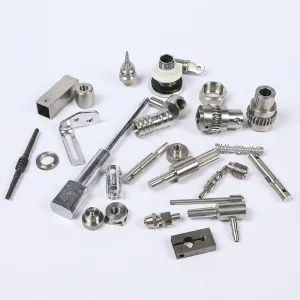
Our product portfolio includes carbon fiber sheets, tubes, plates, CNC-machined parts, and customized composite components widely used in aerospace, automotive, drones, sports equipment, and industrial structures. With a focus on precision engineering and material innovation, we ensure each product offers excellent strength-to-weight ratio, corrosion resistance, and long-term durability.
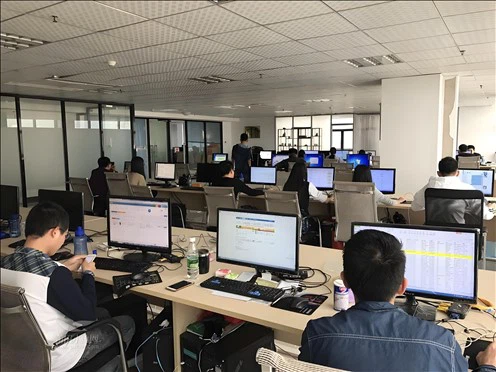
Equipped with modern production facilities and experienced technical teams, RAXis Fiber maintains strict quality control throughout the entire manufacturing process, from raw material selection to final inspection. We also provide flexible OEM and ODM services, supporting clients with custom designs, rapid prototyping, and scalable production.
Driven by continuous innovation and customer-oriented service, we are committed to delivering reliable products, competitive pricing, and efficient lead times. Guangzhou RAXis Fiber Co., Ltd. strives to be a trusted partner in providing lightweight composite solutions that enhance performance and efficiency across multiple industries worldwide.
Understanding the technical parameters that govern carbon fiber durability, weave properties, and manufacturing methods.
Developing ultra-high molecular weight PAN (polyacrylonitrile) precursors. Adjusting tensile modulus levels (from standard modulus to ultra-high modulus exceeding 400 GPa) to serve specific loading profiles in aerospace frames and carbon fiber tubes.
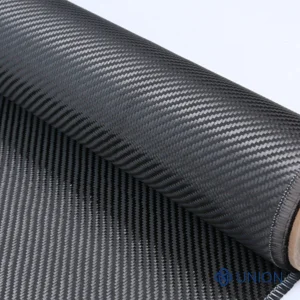
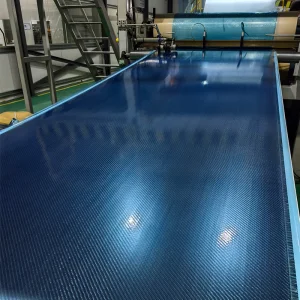
Utilizing high-performance prepregs like our 215GSM 33%RC (Resin Content) Twill Weave. Precise resin control ensures structural integrity with minimum weight, eliminating pockets of unreinforced resin that compromise fatigue limits.
Employing custom diamonds and carbide cutters on specialized multi-axis CNC machines to mill carbon fiber parts. This prevents delamination, splintering, and micro-cracking during mechanical drilling processes.
Applying UV-stabilized clear coats, matte finishes, and wear-resistant epoxy layers. These protect CFRP plates and tubes against environmental degradation, galvanic corrosion (when paired with metals), and moisture absorption.
How we integrate carbon fiber composite technologies into global industrial sectors.
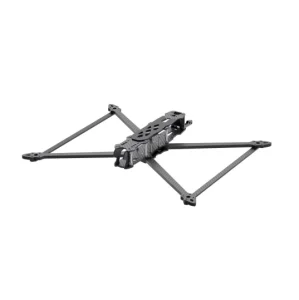
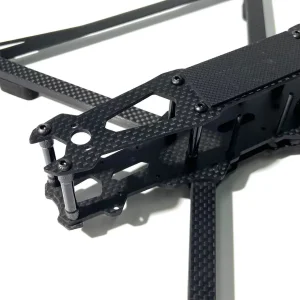
We manufacture structural drone kits like the Mark4 10-Inch and 8-Inch Carbon Fiber Frame Kits. By utilizing high-modulus 3K twill weaves, we optimize torsional stiffness, ensuring stable flight dynamics for high-speed racing and industrial surveillance drones.
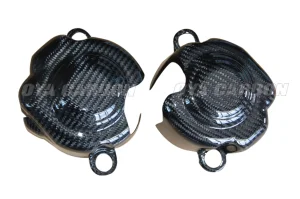
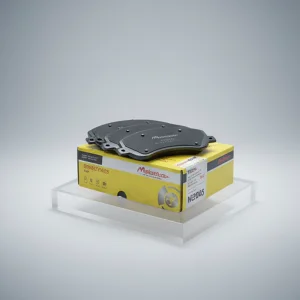
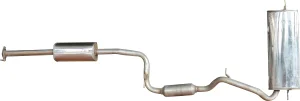
From carbon fiber accessories for exotic sports cars (e.g., Ferrari 458 Italia) to structural chassis plates, we develop aerodynamic splitters, rear diffusers, side skirts, and high-temperature resistant exhaust silencers that reduce vehicle curb weight.
Weight directly impacts cycle times in factory automation. Custom carbon fiber robotic arm linkages, high-tolerance tooling plates, and protective casings dramatically lower payloads for automated high-speed machinery.
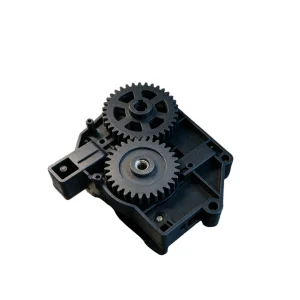
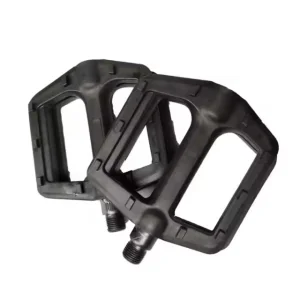
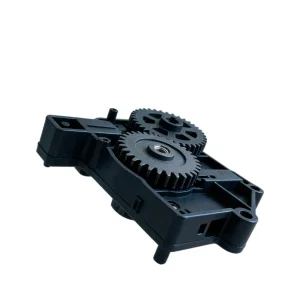
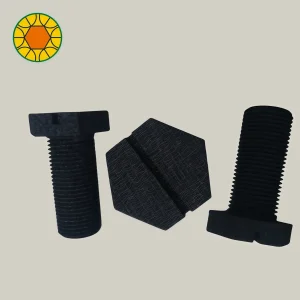
For applications where metallic parts are unsuitable due to magnetic or electrical interference, we combine carbon fiber structures with engineered polymers like Ceramic PEEK, Nylon, and custom ABS components.
Carbon fiber exhibits high radiolucency, making it an ideal choice for X-ray and MRI support tables. Additionally, we manufacture composite protective shields, high-impact casings, and specialized defense system structures.
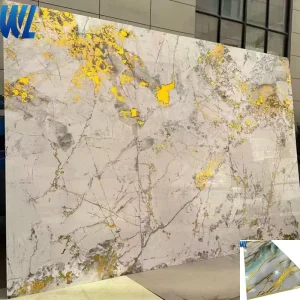
Utilizing high-end architectural composite panels, such as our 3D Gilded Golden Marble PVC foam and carbon fiber bamboo charcoal boards, we deliver durable, lightweight finishes that satisfy flame retardancy standards.
Read technical insights from our expert engineering department regarding design constraints, tolerances, and processing choices.
Resin content dictates the ultimate fiber-to-volume ratio in structural components. A 33% Resin Content (RC) represents the industry sweet spot for high-performance laminates. Too much resin increases overall weight and reduces specific strength, as epoxy is weaker than carbon fibers. Too little resin (dry spots) causes interlayer delamination and reduced shear strength under mechanical stress. By controlling the prepreg matrix to 33% RC, we achieve high mechanical properties during autoclave vacuum compaction.
Delamination occurs when cutting tools exert downward pressure on the fiber laminates, pushing individual plies apart instead of cutting through them clean. To mitigate this risk, RAXis uses PCD (Polycrystalline Diamond) and diamond-coated routers running at high spindle speeds (above 18,000 RPM) combined with low feed rates. We employ specific compression spiral router bits that pull the top plies downward while lifting the bottom plies upward toward the center, ensuring clean, splinter-free margins.
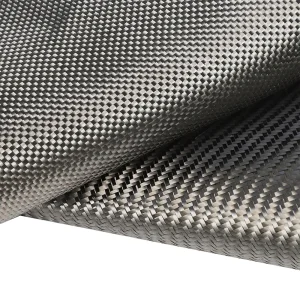
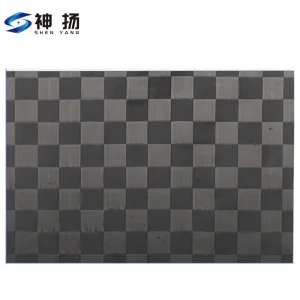
A 3K tow contains 3,000 individual carbon filaments per yarn. The twill weave pattern (typically 2x2) allows the fabric to bend more easily over complex 3D shapes than plain weave. This improves design flexibility during molding. Twill patterns also distribute forces along multi-directional paths, providing high impact resistance and damping capabilities, which protect sensitive flight electronics from motor vibrations.
Carbon fiber is electrically conductive. When placed in direct contact with active metals like aluminum or steel in the presence of an electrolyte, it creates a galvanic cell that corrodes the metal component. To prevent this, we insert an isolating fiberglass scrim layer (often referred to as a "glass layer") or a thin layer of non-conductive plastic (such as PEEK or custom nylon shims) between the carbon composite and the metal mating surfaces.
Discover our comprehensive collection of custom CNC automotive parts, carbon fiber prepregs, and structural aerospace laminates.
 RAXIS Fiber