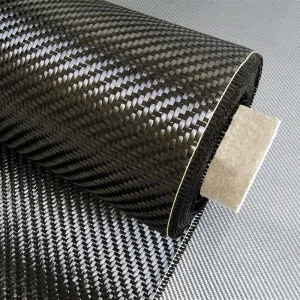
Guangzhou RAXis Fiber Co., Ltd. is a professional manufacturer specializing in carbon fiber sheets, tubes, and custom composite products, delivering lightweight and high-strength solutions for global industries. Based in Guangzhou, China, we integrate research, development, production, and sales to provide advanced carbon fiber materials tailored to diverse application needs.
Our extensive product portfolio includes carbon fiber sheets, tubes, plates, CNC-machined parts, and customized composite components widely used in aerospace, automotive, drones, sports equipment, and industrial structures. With a core focus on precision engineering and structural material innovation, we ensure that every composite product offers an excellent strength-to-weight ratio, high chemical corrosion resistance, and prolonged durability under dynamic stress conditions.
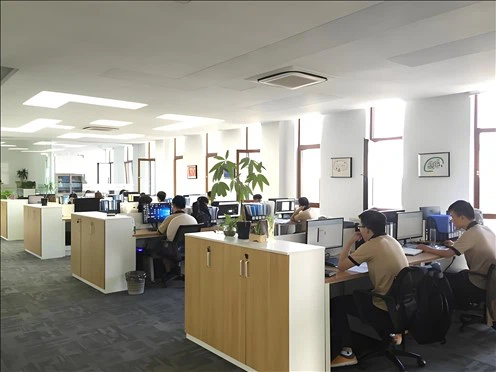
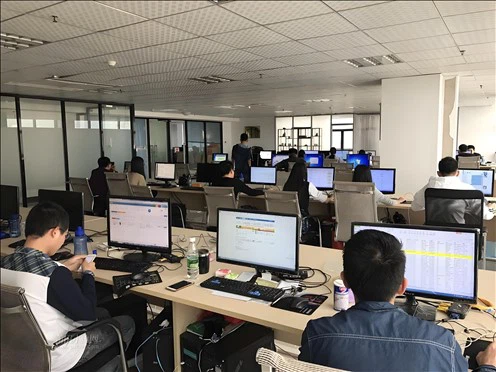
Equipped with modern production facilities and experienced technical teams, RAXis Fiber maintains strict quality control throughout the entire manufacturing process, from raw material selection (using high-performance T300 and T700 carbon fiber carbon precursors) to the final inspection of complex assemblies. We also provide flexible OEM and ODM services, supporting clients with custom designs, rapid prototyping, and scalable production to meet aggressive time-to-market demands.
Driven by continuous innovation and customer-oriented service, we are committed to delivering reliable products, competitive pricing, and efficient lead times. Guangzhou RAXis Fiber Co., Ltd. strives to be a trusted partner in providing lightweight composite solutions that enhance performance and efficiency across multiple industries worldwide.
Carbon Fiber Reinforced Polymer (CFRP) has transitioned from an elite aerospace specialty material to the structural backbone of high-efficiency machinery worldwide.
As international industries face strict carbon neutrality goals and energy efficiency demands, the consumption of high-strength, lightweight composites has surged. China has positioned itself as the preeminent hub for wholesale carbon fiber sourcing due to consolidated supply networks, modern tooling setups, and unmatched turnaround speed.
Historically, composite tooling required expensive steel or aluminum molds with months of lead time. Today, modern rapid prototyping factories in China leverage custom CNC machining of cured composite blocks, flexible bladder molding, and modular compression molds to reduce turnaround times from months to mere days, lowering barriers to entry.
By sourcing raw prepregs directly and standardizing curing operations, RAXis Fiber offers global buyers institutional access to scale. Our strategic location in Guangzhou streamlines logistics directly to global ports, ensuring shipping costs do not offset the cost benefits of offshore manufacturing.
The composite industry is evolving beyond traditional hand layups into automated, high-precision engineering protocols.
Unlike traditional thermoset epoxy systems which undergo irreversible chemical changes during curing, Carbon Fiber Reinforced Thermoplastics (CFRTP) utilize matrices like PEEK, PEI, and PPS. This permits reforming, faster cycle times, and recyclability, addressing environmental concerns in automotive and aerospace applications.
Autoclaves require massive capital and energy. OOA methods, particularly Vacuum Bag-Only (VBO) prepreg processing and advanced resin transfer molding (RTM), achieve equivalent void content rates (<1%) while reducing equipment expenditures and component footprint constraints.
Additive manufacturing of continuous carbon fiber filaments combined with automated fiber placement lines allows engineers to program variable-thickness layers and optimize fiber orientation paths along load trajectories determined by finite element analysis (FEA).
Embedding fiber Bragg grating sensors or thin piezoresistive sheets directly within layup layers allows carbon fiber parts to perform real-time structural health monitoring, which is crucial for modern high-load military UAVs and aerospace brackets.
We utilize a comprehensive engineering workflow to turn CAD concepts into structurally sound, dynamic components.
Using finite element analysis (FEA) software, we model anisotropic behaviors of carbon laminates. We define layups (e.g., [0/45/-45/90]s quasi-isotropic schedules) to matches expected stresses, reducing mass without sacrificing integrity.
For low-volume prototypes, we utilize epoxy tooling boards or high-density aluminum molds. For high-volume series, matched metal steel dies are constructed to withstand extreme heat and pressure cycles during production runs.
Employing compression molding, autoclave curing, or roll-wrapping techniques. Resins are cured under strict temperature profiles (often reaching 120°C - 180°C) to ensure cross-linking and minimal void formation.
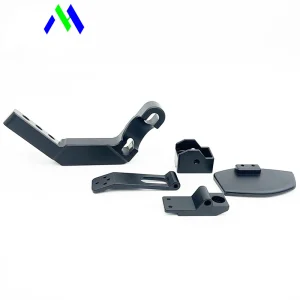
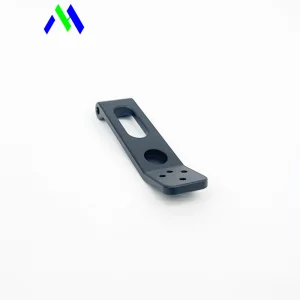
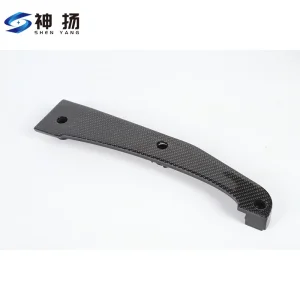
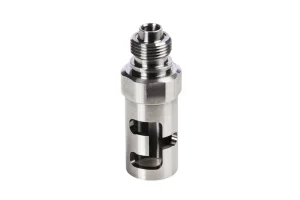
Post-cured blanks are transferred to high-speed CNC milling centers. We use custom tooling (such as CVD diamond-coated router bits) to machine outer contours and mounting holes, eliminating delamination and fiber pull-out.
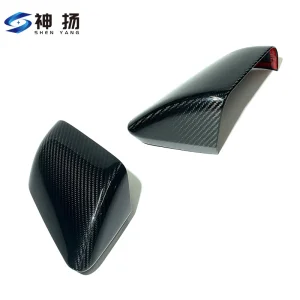
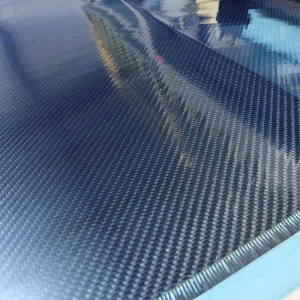
Components are bonded using high-strength structural epoxies, combined with aluminum inserts, and finished with UV-protective clear coats (glossy, matte, or textured) to prevent environmental degradation.
Different sectors demand unique performance characteristics from carbon fiber composites. RAXis Fiber provides targeted solutions to meet these distinct environments.
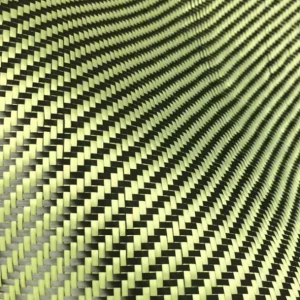
Weight reduction translates to direct fuel savings or range extension. Our carbon fiber brackets, ducting, and fairings use flame-retardant epoxy resins and aerospace-grade T700 unidirectional weaves to meet strict FAA/EASA airworthiness and outgassing parameters.
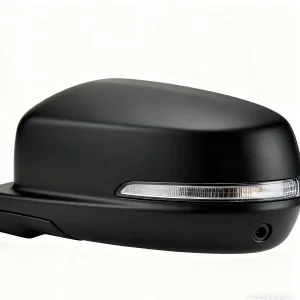
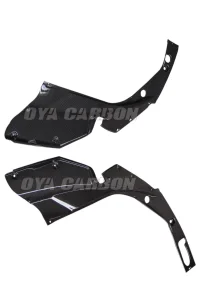
From formula-class bodywork to consumer EV battery enclosures, we supply custom carbon fiber panels, monocoques, and engine components. These parts reduce unsprung weight, lower center of gravity, and optimize impact crash energy absorption.
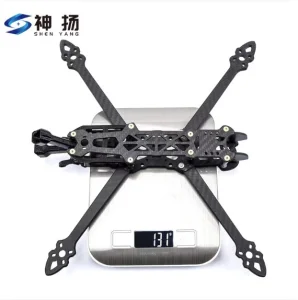
Modern commercial inspection and agricultural drones require stiff platforms to eliminate vibration and support heavy camera and battery payloads. We fabricate custom multi-rotor arm tubes, central hub plates, and aerodynamic arm enclosures.
High-speed pick-and-place robot arms benefit from the low inertia of CFRP. Swapping heavy steel components for our custom CNC-machined carbon fiber arm linkages permits faster cycle speeds, reduced motor wear, and improved accuracy.
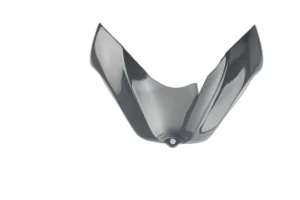
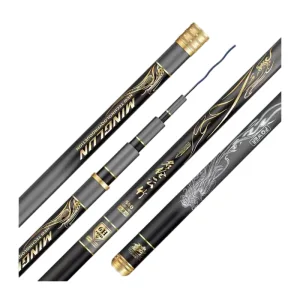
Whether it's ultra-stiff bicycle frame components, airbox tank covers for performance motorcycles, or telescopic fishing hand poles extending up to 7.2 meters, we tune flex patterns by adjusting composite weave layups to maximize strength and tactile responsiveness.
Safety-critical industries require reliable, traceable material performance. RAXis Fiber implements multi-tiered inspection protocols to verify every part.
Our raw carbon fiber prepregs undergo incoming material inspection, checking matrix resin content (e.g., 35% - 37% RC), areal weight, and shelf-life stability. During layup, our climate-controlled cleanrooms prevent particulate contamination, which is a major cause of interlaminar micro-voids.
Post-cure evaluations leverage Ultrasonic Non-Destructive Testing (NDT) to inspect for internal delamination or voids. Finished dimensions are verified using Coordinate Measuring Machines (CMM) to confirm compliance with client drawings, down to ±0.02mm for critical interfaces.
As a verified exporter from the Pearl River Delta industrial zone, RAXis Fiber adheres to ISO 9001 standards. Material batch records and chemical compliance certificates (RoHS, REACH) are maintained to provide complete supply chain transparency.
Get answers to common technical, engineering, and commercial questions regarding carbon fiber prototyping.
 RAXIS Fiber