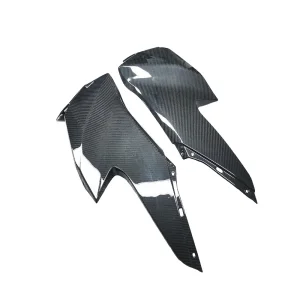
The global demand for high-performance carbon fiber racing components has transcended traditional automotive manufacturing, evolving into a sophisticated ecosystem of material science and precision engineering. At the heart of this industry lies the transition from manual lay-up processes to automated, AI-driven production environments. As we look at the industrial landscape, "CE Certification" has become the baseline benchmark for quality, ensuring that components—whether they be chassis, aerodynamic bodywork, or internal structural members—meet stringent safety and performance standards.
Modern racing components demand more than just weight reduction; they require a deep understanding of anisotropic material properties. Suppliers are now expected to provide comprehensive data on fiber orientation, resin matrix integrity, and thermal expansion coefficients. This shift highlights the critical importance of selecting factories that integrate R&D, structural simulation, and standardized production workflows.
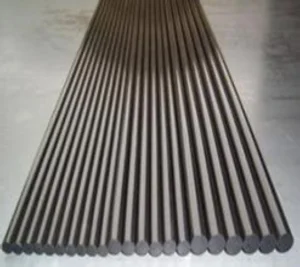
Guangzhou RAXis Fiber Co., Ltd. stands as a pillar of this manufacturing evolution. By integrating upstream raw material processing with downstream CNC-machined customization, the company provides a robust solution for industries ranging from aerospace and UAV (Drone) technology to competitive automotive racing. Their facility in Guangzhou operates on a model of vertical integration—minimizing lead times while maximizing consistency.
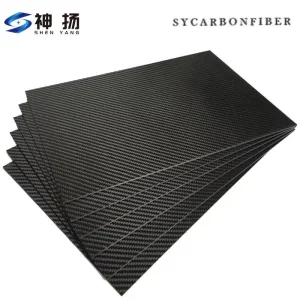
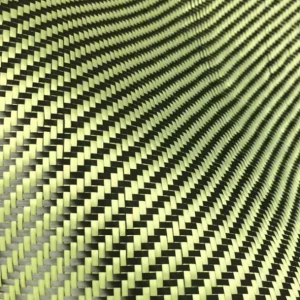
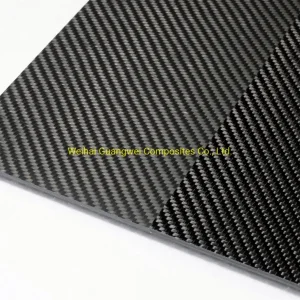
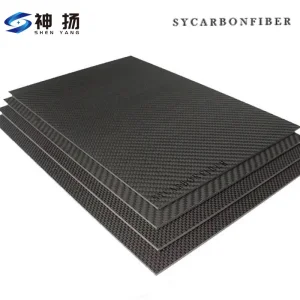
Their capability to offer flexible OEM/ODM services allows clients to transition from initial concept—using high-modulus carbon fiber sheets—to production-ready components. This agility is what separates top-tier suppliers from mass-market producers. Whether it is 3K, 12K, or hybrid Aramid weaves, RAXis Fiber maintains the structural integrity required for high-stress applications.
The next decade of carbon fiber manufacturing will be defined by three critical trends:
CE Certification signifies that the products comply with EU safety, health, and environmental protection requirements. For carbon fiber racing components, it provides a trusted assurance of structural durability under high-stress conditions.
The process typically begins with CAD/structural analysis, followed by prototype generation using 3D printing or CNC machining. RAXis Fiber facilitates this by ensuring rapid prototyping before entering mass-production cycles.
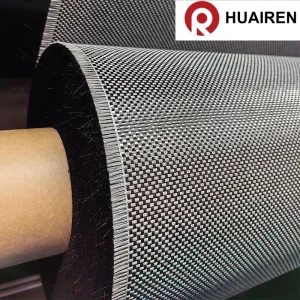
3K (3,000 filaments per tow) is generally used for intricate, detailed parts, whereas 12K (12,000 filaments) is utilized for large-scale structural integrity, offering a balance between cost-efficiency and mechanical strength.
 RAXIS Fiber