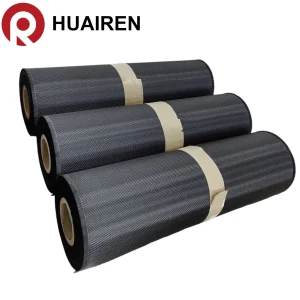
Engineered for high-durability applications, industrial retrofitting, and infrastructure reinforcement across Kinshasa, Lubumbashi, Kolwezi, and the broader Congo region.
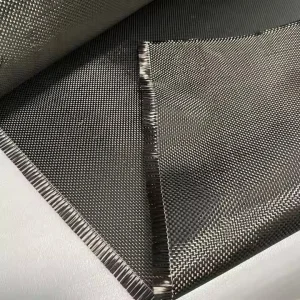
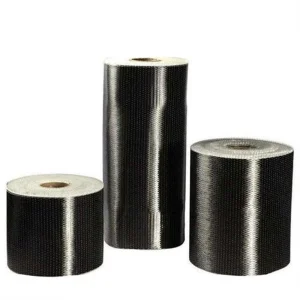
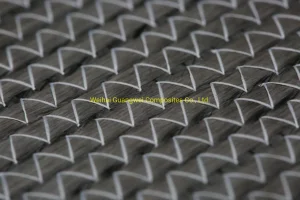
The Democratic Republic of the Congo (DRC) is home to some of the world's most demanding physical and industrial landscapes. From the copper and cobalt super-mines of the Katanga region (Kolwezi and Lubumbashi) to the sprawling transport infrastructures connecting Kinshasa and the port of Matadi, modern industries face extreme mechanical loads, seismic risks, and highly corrosive chemical environments.
Traditional structural repair and reinforcement methods—such as steel jacketing and concrete casting—often fall short due to logistical hurdles, high weight constraints, and susceptibility to acid corrosion. This is where Carbon Fiber Reinforced Polymer (CFRP) technology provides a disruptive leap forward.
As a leading global manufacturer, Guangzhou RAXis Fiber Co., Ltd. specializes in formulating and supplying high-performance carbon fiber sheets, tubes, and woven fabrics that are uniquely optimized for the intense tropical climates and heavy-load demands of the DRC market.
Worldwide, the civil engineering, aerospace, and energy sectors are undergoing a massive transition from traditional metallurgy to advanced carbon composites. The driver is simple: strength-to-weight efficiency and structural lifetime expansion. In concrete reinforcement, CFRP (Carbon Fiber Reinforced Polymer) has proven to extend the service life of aging bridges, tunnels, and columns by more than 50 years, avoiding carbon-heavy demolitions and reconstructions.
Additionally, the global wind energy market utilizes multi-axial carbon fabrics to engineer longer, stiffer turbine blades capable of operating in low-wind regimes. This technology is vital for clean energy developers aiming to harness wind resources along Sub-Saharan coastal and highland zones.
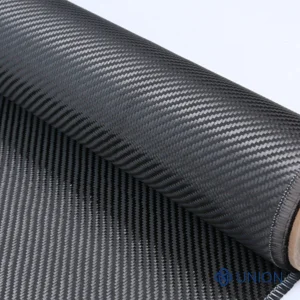
For operations in Kolwezi and Lubumbashi, heavy-duty processing plants rely on structural steel columns that suffer rapid degradation due to sulfur processing fumes, moisture, and chemical acids. Unidirectional and triaxial carbon fiber fabrics from RAXis Fiber serve as an impermeable barrier. Wrapped around deteriorating concrete piers or corroded steel beams, they instantly restore structural integrity without shutting down essential mining lines.
Furthermore, local geotechnical shifting in seismic zones like Goma requires structural materials that offer incredible shear strength without altering the structural mass. RAXis unidirectional carbon wrap meets these constraints perfectly, providing elastic modulus matching for optimum load redistribution.
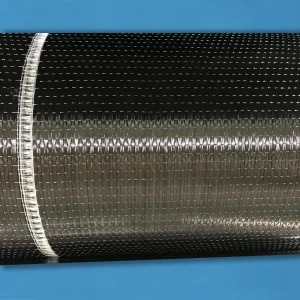
Applying Carbon Fiber Reinforced Polymer (CFRP) to existing industrial concrete requires an understanding of mechanical bonding. Unidirectional carbon fibers (e.g., 200GSM, 300GSM, 600GSM) align in a single axis to resist high tensile forces. The implementation process follows strict technical parameters:
Concrete must be cleaned of loose aggregate, chemical residue, and paint. Surface profiling is carried out using sandblasting or diamond grinding to achieve an open-pore texture (CSP-3 or CSP-4 profile standard).
A low-viscosity epoxy primer is applied to penetrate the concrete capillaries. This creates a monolithic mechanical key between the cement matrix and the composite layers.
The unidirectional fabric is embedded into the wet saturant epoxy resin. Special grooved rollers are used to squeeze out air pockets, preventing interlaminar shear failures and ensuring the fiber volume ratio remains above 55%.
| Property Parameter | Guangzhou RAXis High-Strength Spec | Standard Steel Equivalent | Structural Advantage for DRC Engineers |
|---|---|---|---|
| Tensile Strength | ≥ 4900 MPa | 350 - 450 MPa | Over 10x tensile loading capacity with minimal profile thickness. |
| Elastic Modulus | 230 - 250 GPa | 200 GPa | Superior stiffness matching to limit deflection under seismic stress. |
| Specific Weight | 1.6 - 1.8 g/cm³ | 7.85 g/cm³ | Reduces structural dead load; eliminates the need for heavy machinery during installation. |
| Corrosion Resistance | Impervious to Acid/Salt/Alkali | Rapid oxidization in humid zones | Perfect for wet copper purification circuits and coastal storage units. |
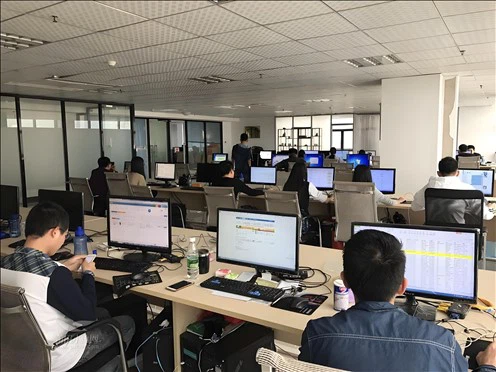
Your Authoritative Partner for Global-Grade Lightweight Composites
Guangzhou RAXis Fiber Co., Ltd. is a professional manufacturer specializing in carbon fiber sheets, tubes, and custom composite products, delivering lightweight and high-strength solutions for global industries. Based in Guangzhou, China, we integrate research, development, production, and sales to provide advanced carbon fiber materials tailored to diverse application needs.
Our product portfolio includes carbon fiber sheets, tubes, plates, CNC-machined parts, and customized composite components widely used in aerospace, automotive, drones, sports equipment, and industrial structures. With a focus on precision engineering and material innovation, we ensure each product offers excellent strength-to-weight ratio, corrosion resistance, and long-term durability.
Equipped with modern production facilities and experienced technical teams, RAXis Fiber maintains strict quality control throughout the entire manufacturing process, from raw material selection to final inspection. We also provide flexible OEM and ODM services, supporting clients with custom designs, rapid prototyping, and scalable production.
Driven by continuous innovation and customer-oriented service, we are committed to delivering reliable products, competitive pricing, and efficient lead times. Guangzhou RAXis Fiber Co., Ltd. strives to be a trusted partner in providing lightweight composite solutions that enhance performance and efficiency across multiple industries worldwide.
Providing direct answers to critical technical questions raised by structural consultants, mining procurement officers, and civil engineering firms.
High relative humidity (frequent in provinces like Kinshasa, Équateur, and Bas-Congo) can impact standard epoxy resins by causing amine blushing or delayed curing cycles. To solve this, RAXis Fiber supplies modified, moisture-tolerant epoxy structural adhesives that cure reliably in up to 90% humidity without losing interlaminar shear strength (ILSS). Always ensure substrate moisture is below 4% before wet lay-up.
We coordinate multiple logistics corridors to suit urgency levels. For structural materials, maritime shipping typically takes 35-45 days to the Port of Matadi. For East DRC regions (Lubumbashi, Kolwezi, Goma), we often route cargo through the Port of Dar es Salaam (Tanzania) or Durban (South Africa) followed by overland road transport, providing optimal balance between speed and budget.
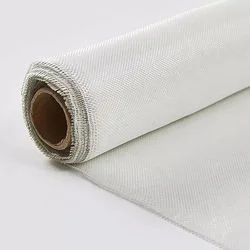
Yes, but galvanic corrosion prevention is vital. Direct contact between raw carbon fibers and steel can lead to accelerated galvanic deterioration of the steel. RAXis recommends using an intermediate layer of lightweight fiberglass woven cloth (conductive isolation layer) embedded in the epoxy matrix to completely isolate the steel from the carbon sheet, ensuring long-term, fail-safe structural stabilization.
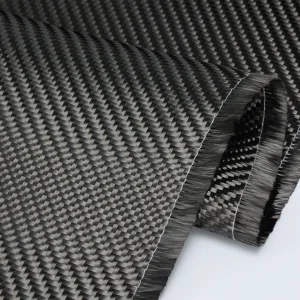
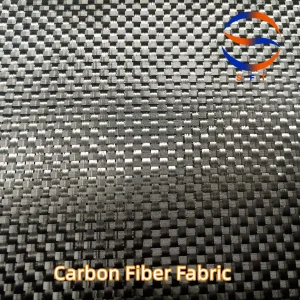
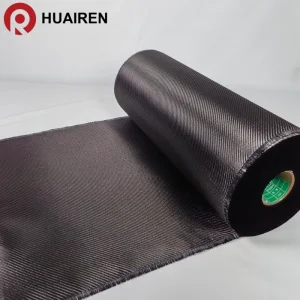
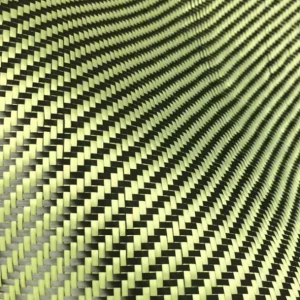
Comprehensive composite inventory featuring carbon fibers, conductive cloths, aramid hybrids, and custom woven textiles manufactured to international standards.
 RAXIS Fiber